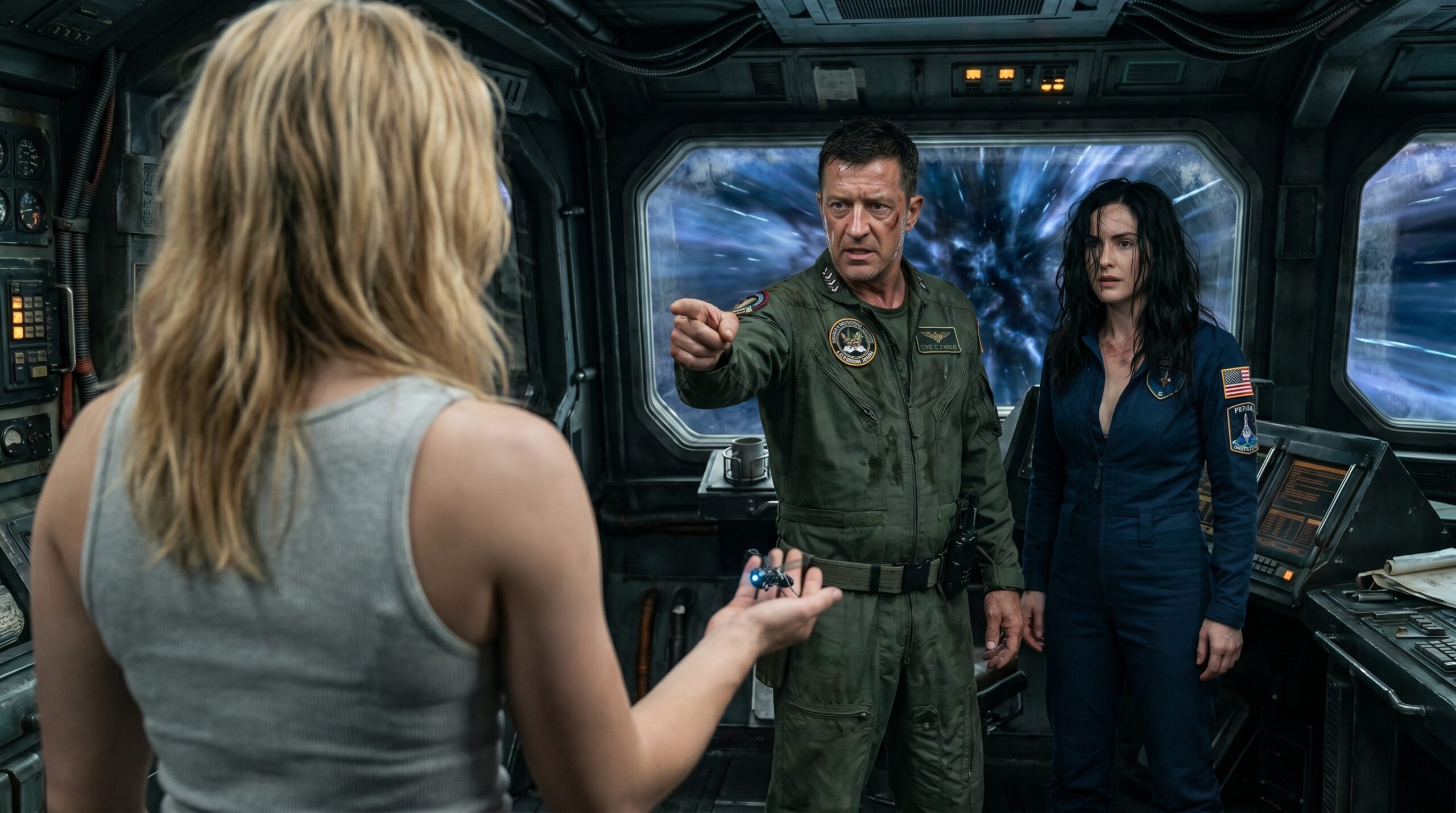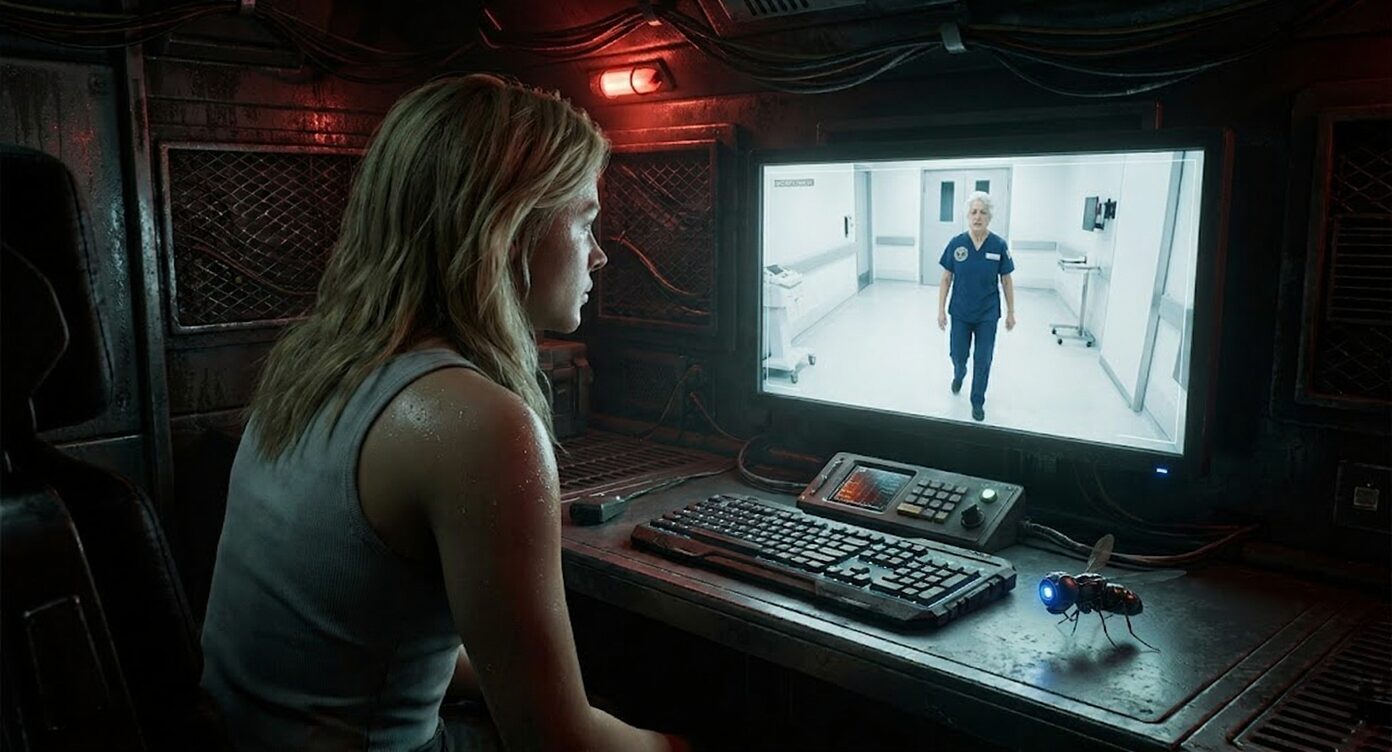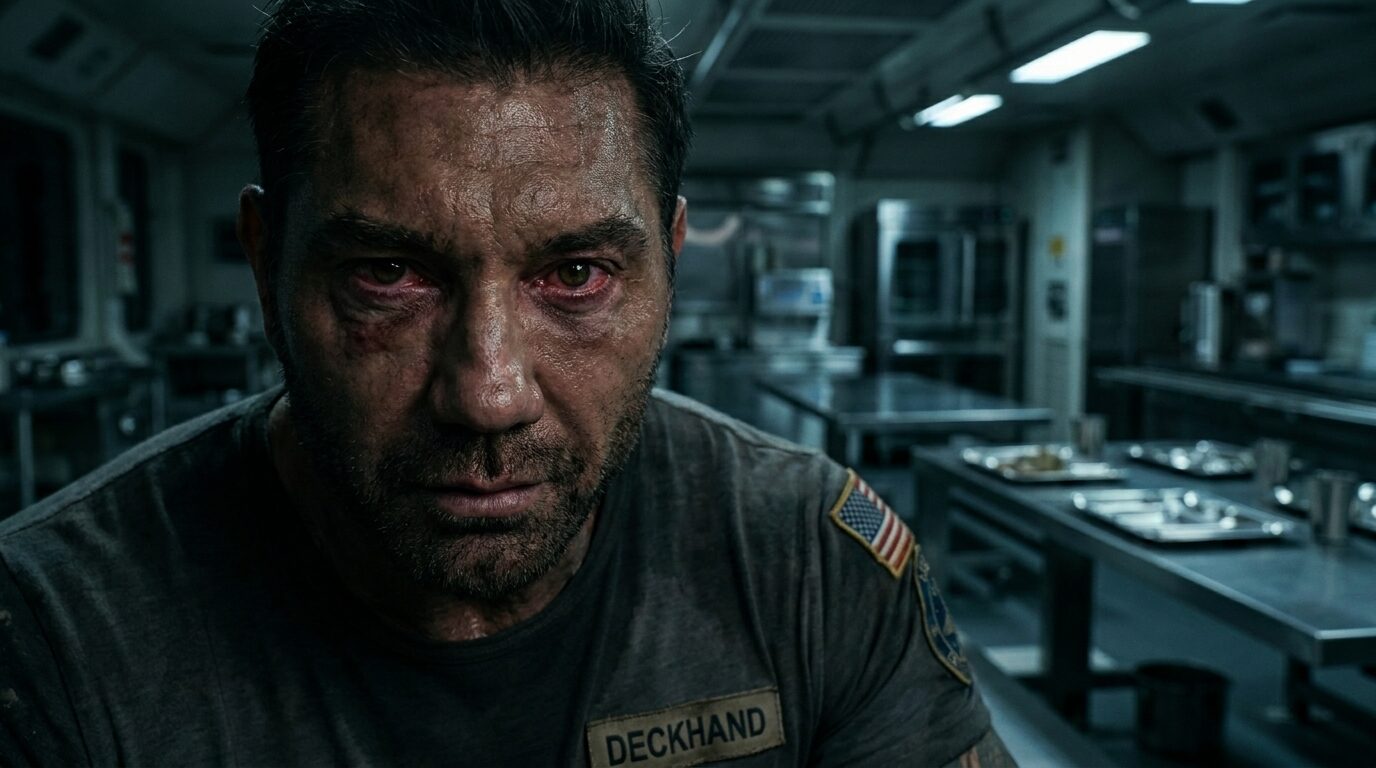
Author: Connie S. Myres -admin

  • 16 Structural Integrity – Chapter 16

    16 Structural Integrity – Chapter 16

    Draft 2

    Month 3: The Dead Zone

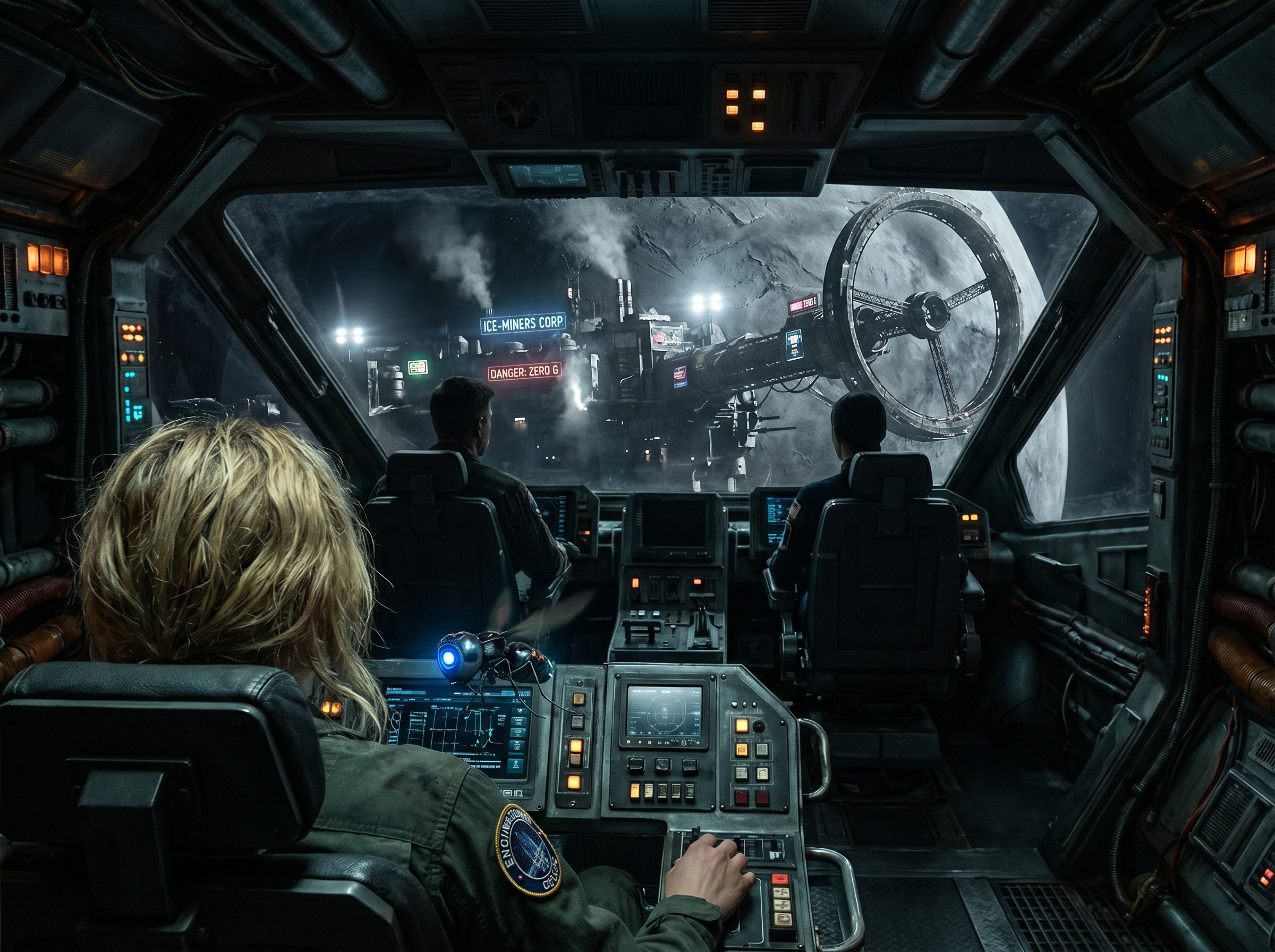
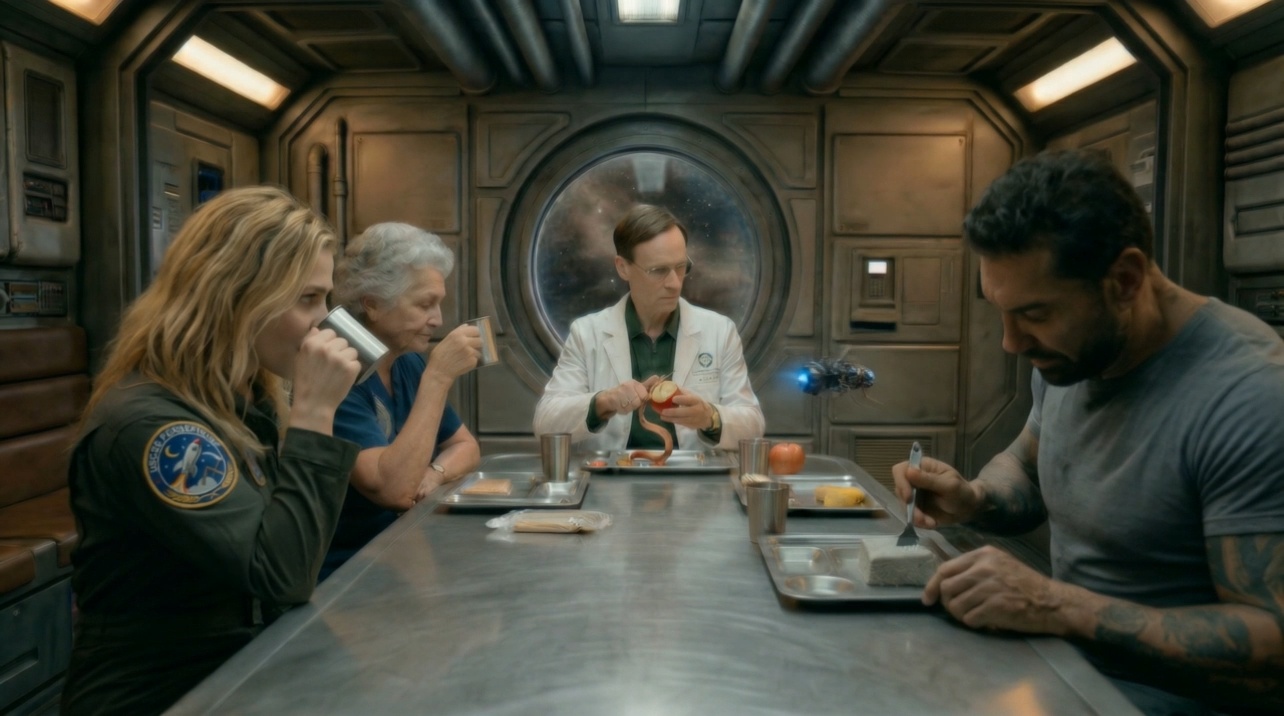
    The mess hall felt exactly like the inside of a steam pipe.

    Helen sat at the table, staring at a small, white pill in her palm. A creeping dread had haunted her ever since she breathed the air down in Cargo Bay 4 weeks ago.

    She popped the synthetic sedative into her mouth and washed it down with a sip of lukewarm water.

    Within minutes, the sharp edges of her panic began to dull. The chemical blanket of the medication settled over her brain, forcing her pulse to slow. It left her feeling sluggish and detached, as if she were watching the world through a dirty pane of glass, but at least she wasn’t hyperventilating.

    She picked up her micro-wrench, turning her attention back to a disassembled water filtration unit on the table. She dragged the back of her wrist across her forehead, clearing away a layer of sweat. The Persephone’s climate control system was losing the battle against the power draw in the lower decks.

    The scent bleeding through the ceiling vents smelled like overripe fruit rotting in the sun. It was the unmistakable odor of the fog she had found in Cargo Bay 4.

    The door hissed open, and Janet walked in. The medical officer looked as though she hadn’t slept since they left Charon Outpost. Her skin carried a sickly gray tint.

    “I need ice,” Janet said. “Please tell me the synthesizer is still making ice.”

    “It’s making warm sludge.” Helen set her wrench down. “The temperature is climbing again. Whatever Kinskey has plugged in down in Bay Four is siphoning the coolant right out of the primary lines.”

    Janet walked over to the beverage dispenser and grabbed a cup. “Have you asked the Captain to intervene? It’s a health hazard, Helen. My med-bay feels like a sauna, and half my sterilized equipment is developing condensation.”

    Helen looked down at the table. “John is busy. He and Ingrid are locked in the cockpit trying to manually calibrate the slip-drive stabilizers. Or so they tell me.”

    Janet paused, the cup halfway to the dispenser. She looked at Helen with sympathy. “Helen. You have to stop doing this to yourself. They are flying the ship.”

    “I know what they are doing,” Helen snapped. She forced herself to take a deep breath. The heat made her irritable, but the sedative kept the anger from boiling over into a shout. “I’m sorry, doc. I’m just exhausted.”

    “We all are.” Janet punched a button on the machine. A stream of tepid water trickled into her cup. “This air is giving me a migraine that won’t quit. And the deckhand is faring even worse.”

    Magnus trudged into the mess hall. He wore a stained undershirt, dark patches of sweat blooming across his chest and under his arms. He scratched aggressively at his neck, his eyes bloodshot and darting around the room with nervous energy.

    “Doc,” Magnus said. “I need something stronger than those over-the-counter tabs you gave me. My skin feels like it’s crawling, and I haven’t slept in two days.”

    “I am not giving you industrial strength medicine, Magnus.” Janet sipped her water. “Your liver is still recovering from the chemical solvent you drank at Charon Outpost. Drink some water. Take a cold shower.”

    “The showers are spitting out rust!” Magnus yelled.

    He marched toward the food synthesizer, shoving past Janet. “Everything on this rusted bucket is broken. The air tastes like spoiled meat. The Captain treats us like prisoners, locking himself away up front. And now I can’t even get a decent meal.”

    Magnus slapped his hand against the synthesizer’s keypad, punching in his breakfast order with violent strikes.

    At the far end of the long table, Claude said, “Perhaps, Mr. Cantarini, if you applied a fraction of the restraint required of a functioning adult, you wouldn’t continuously break the ship’s hardware.”

    Helen turned her head. Claude looked entirely unbothered by the stifling heat. He tapped a stylus against his datapad, not even bothering to look up at the mechanic.

    Magnus stiffened. He turned his head slowly. “What did you say to me, Suit?”

    “I simply made an observation. You complain about the equipment, yet you treat it with the primitive aggression of an unevolved primate. It is a miracle you haven’t dismantled the entire ship with your temper tantrums.”

    “Hey.” Helen stood up. “Knock it off, Kinskey.”

    “I am merely stating facts, Chief Mitchell.” Claude looked up. “He is a manual laborer. He moves boxes from point A to point B. When the environment becomes mildly uncomfortable, his cognitive functions degrade into base hostility. It is entirely predictable.”

    Magnus took a step away from the synthesizer. His hands curled into tight fists. “You think you’re better than me because you play with dirt in a clean room? You’re the reason it’s a hundred degrees in here.”

    “I am conducting highly classified research for a multi-trillion-credit corporation. You lost your hazard pay rolling loaded dice in a slum. We are not the same, Mr. Cantarini. You are expendable.”

    The synthesizer behind Magnus whined loudly. It stalled a moment before a pressurized jet of boiling synthetic coffee sprayed directly across Magnus’s bare arm.

    Magnus roared. He spun around and brought his fists down on the synthesizer’s control panel. The plating dented inward. “Piece of garbage!” he screamed, slamming his fist into the machine again, cracking the digital display.

    “Magnus, stop!” Janet yelled.

    Magnus ignored her. He spun back around, his eyes locking onto Claude.

    He crossed the mess hall. Claude didn’t even have time to stand up. Magnus grabbed the science officer by the lapels of his pristine lab coat and hauled him out of his seat.

    “Call me expendable again.” Magnus drew his fist back.

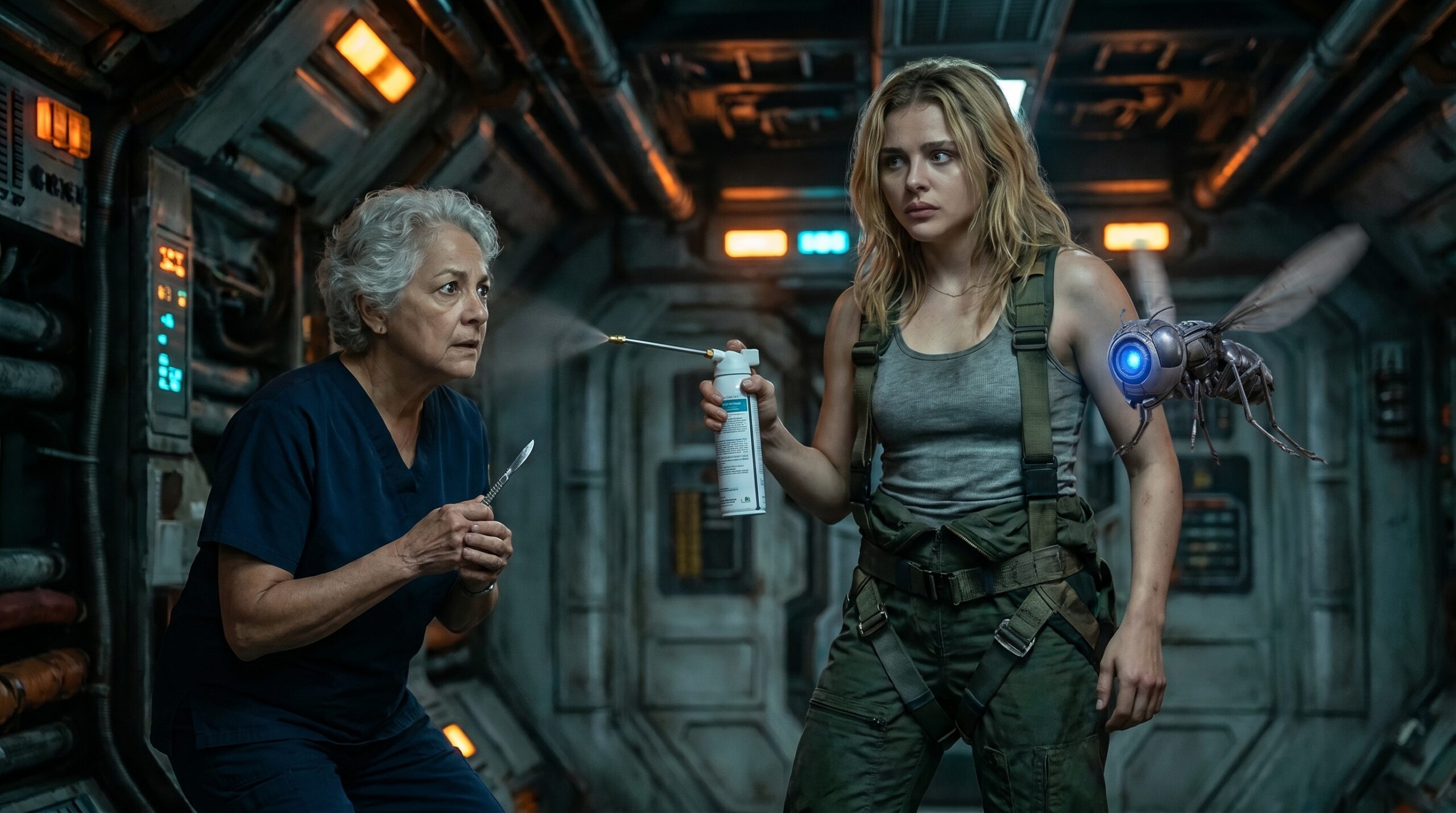
    Unit Seven unclasped his articulated legs from the canvas strap of Helen’s tank top. He zipped across the room, hovering directly between Magnus’s drawn fist and Claude’s face.

    “Mr. Cantarini, I must ask you to stand down.” Seven’s optic began pulsing a rapid, warning red. “I am registering a severe, ship-wide biometric anomaly. Your cortisol levels, along with the rest of the crew’s, have reached lethal extremes. Furthermore, my atmospheric sensors indicate a direct correlation between your aggression and the uncatalogued botanical particulate currently seeping through the ventilation system.”

    Helen fought through the fog of her sedative. “Seven? What particulate?”

    “The airborne organic matter originating from Cargo Bay Four, Madam.” Seven rotated in the air to face her. “It appears to act as a potent neuro-stimulant. It is highly probable the Science Officer’s greenhouse is inadvertently poisoning the crew’s central nervous—”

    “Shut up!” Magnus swung his arm, backhanding the drone out of the air.

    Seven hit the metal floor with a crack. The drone bounced once and skidded under the table. His legs locked up, his optic flashed stark white, and his rotors spun down.

    “Seven!” Helen lunged forward to pick up the drone.

    The mess hall doors hissed open. John marched in.

    Helen stood with Seven in her hands. John didn’t look like her husband. His command uniform was rumpled and soaked with sweat at the collar. His jaw was clenched tight, and his eyes carried a feverish intensity that terrified her.

    “Put him down,” John ordered.

    Magnus kept his grip on Claude. “Captain, this arrogant piece of—”

    “I said put him down!” John didn’t wait for compliance. He crossed the room and tackled Magnus.

    The momentum sent both of them crashing into the bulkhead. Magnus dropped Claude, but John didn’t stop. He pinned Magnus against the wall, driving his forearm into the mechanic’s throat.

    Magnus gagged, his hands coming up to force John’s arm away.

    “John, stop!” Helen screamed. “You’re hurting him!”

    “Stay back, Helen!” John leaned in, putting his entire body weight against Magnus’s windpipe. The mechanic’s face turned a deep red.

    “You want to tear my ship apart? You think you can start a mutiny on my deck?”

    “He wasn’t starting a mutiny,” Janet said. “Captain, let him breathe! It’s just the heat and lack of sleep.”

    “It’s insubordination.” John leaned his face inches from Magnus’s gasping expression. “You are a liability. Everyone on this ship is becoming a liability. You pull a stunt like this again, and I will personally lock you in the airlock and vent the room. Do you understand me?”

    Magnus let out a strangled sound, tapping his hand desperately against the bulkhead in surrender.

    Helen stood frozen. She stared at John and the bulging veins in his neck as he choked his most loyal crewmate. This wasn’t the man she married. This was a dictator losing his grip on reality.

    If John was capable of this kind of violence, what would he do to her if she kept asking questions about the locked cockpit doors?

    John stepped back. Magnus slumped against the wall, coughing as he slid down to the floor, gasping for air.

    “Get to your quarters,” John said, his chest heaving with exertion. “You’re confined until we reach Tartarus Colony. If I see you in the corridors, I will consider it a hostile action.”

    Magnus didn’t argue. He rubbed his throat, shot a venomous glare at Claude, and stumbled out of the mess hall.

    John turned slowly, his manic eyes sweeping over Janet and Helen. “Clean up this mess. And keep the noise down. Ingrid and I need absolute focus to fly this ship.”

    Without another word, John walked out.

    The room fell dead silent, except for the hum of the slip-drive and the slow drip of spilled coffee from the ruined synthesizer.

    Janet covered her mouth with her hand, looking shaken. She turned and hurried out the door, heading back to the medical bay.

    Helen looked at the damaged drone in her hands. Unit Seven’s casing was cracked. His optic was completely dark. Her only lifeline, the only thing that had just offered her a logical answer, was dead in her hands.

    Claude was still standing by the table. He calmly brushed an invisible speck of dust from his lab coat. He didn’t look shaken by the incident. He looked rather entertained.

    He reached into his pocket and pulled out the nasal spray bottle.

    “A highly stressful environment, Chief Mitchell. One must protect one’s own constitution against the rigors of deep space.”

    He held the bottle to his nostril, inhaled, and depressed the pump. He repeated the action on the other side.

    Claude slipped the bottle back into his pocket. He glanced at the broken drone in Helen’s hands, offered her a chilling smile, and strolled out of the mess hall, leaving Helen alone in the suffocating heat.

    Caption

  • 15 Structural Integrity – Chapter 15

    15 Structural Integrity – Chapter 15

    Draft 2

    Month 2, Day 14: The Dead Zone continued

    Inside the ultraviolet-lit environment of the Science Lab, Claude held a pair of micro-tweezers, extracting a microscopic spore from a glass slide.

    A blaring alarm shattered his concentration.

    Claude set the tweezers down and turned to his primary console. A red indicator pulsed over the schematic for Cargo Bay 4. The automated environmental sensors had detected a localized pressure drop and triggered the blast shutters. A Level-1 Quarantine breach.

    He couldn’t check the internal visual feeds; he had severed the bay’s cameras days ago to ensure no one accidentally saw his black-market cargo.

    Claude stood, smoothing the front of his white lab coat, and exited the lab. He walked briskly down the corridor toward the lower decks.

    When he reached the primary bulkhead for Cargo Bay 4, the electronic lock still glowed red. The main doors were secure, but Claude looked down. A secondary maintenance hatch near the floor plates hung open. The locking mechanism was mangled, the metal bent and scored with the distinct marks of a hydrospanner.

    Helen Mitchell.

    Claude pulled out his datapad and quickly punched in his Level-1 override. The blaring siren abruptly cut off, plunging the corridor back into silence. He tapped a second command, and the blast shutters that had dropped to seal the bay retracted upward into the ceiling.

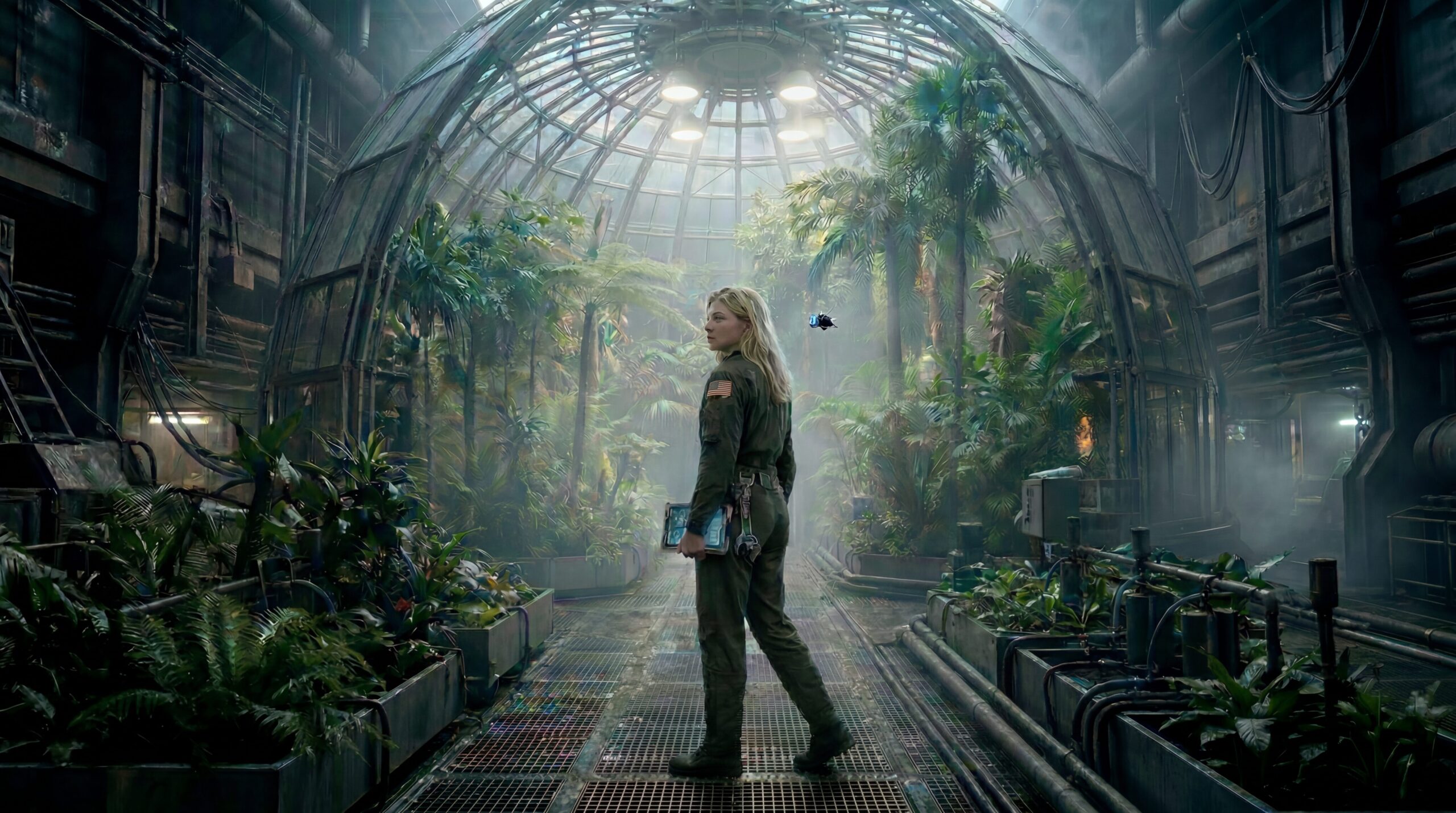
    Bypassing his own encryption, Claude commanded the main bulkhead doors to slide open and stepped onto the metal walkway. The bio-dome was sweltering. The vats of hyper-algae were in full bloom, but the air was thick with a dense, amber-colored fog rolling off the floor.

    He didn’t need to check his monitors to know what it was. The alien’s stasis pod was leaking.

    Claude moved swiftly to a bulkhead emergency station, pulled a re-breather mask from its mount, and strapped it over his face. He waded through the humid vegetation and the haze toward the back of the bay.

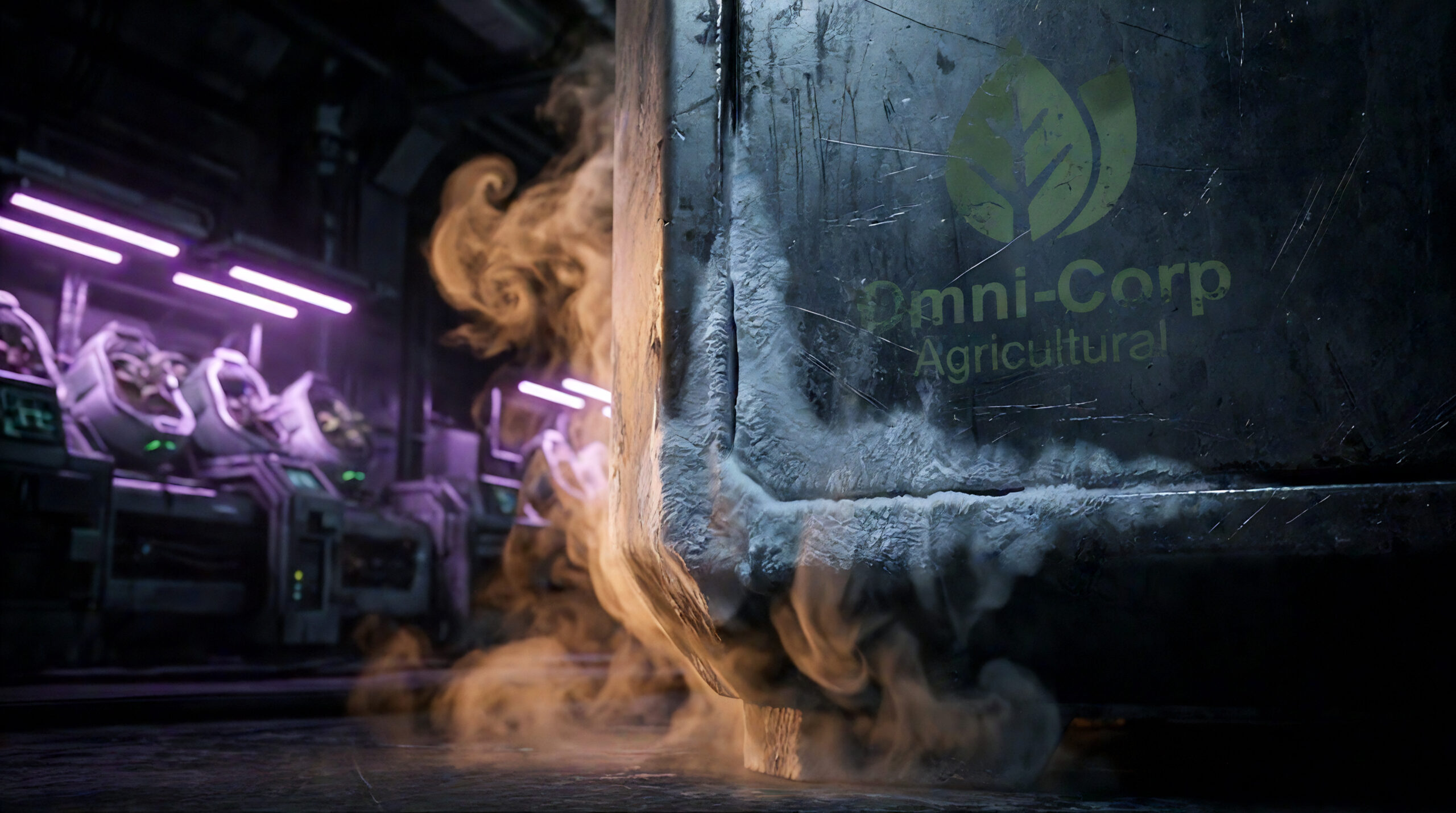
    The standard Omni-Corp agricultural transport crate sat exactly where he had left it, but amber fog hissed from its seams. Claude punched a code into the side panel. With a hiss of depressurization, the outer metallic walls retracted, sliding downward into the base to reveal the true container hidden inside: the Level-5 Bio-Stasis Cylinder.

    The thick glass was heavily frosted. Claude inspected the base. A small fracture had spider-webbed across the primary cryo-seal. The creature inside was still dormant, but the failing seal was allowing its psychoactive spore-gas to bleed into the room.

    Claude retrieved a tube of industrial resin from his pocket. He applied a thick layer over the fracture, sealing the worst of the breach. The heavy venting stopped, but a faint, unsealable wisp of vapor continued to curl upward from the edge of the patch. It would hold the creature in stasis, but the gas leak was a permanent fixture.

    He tapped the keypad on the outer shell’s base. The walls rose and locked together, enclosing the frosted glass and the creature once again.

    He checked the bay’s environmental readouts. The air was saturated. He needed to clear the visible fog before Mitchell came back with the Captain.

    Venting the room into the vacuum of space would trigger a ship-wide decompression alarm, bringing the entire crew down on his head. Claude walked to the localized scrubber terminal. Instead of a hard vacuum purge, he manually overrode the exhaust valves, forcing the bay’s contaminated air into the Persephone’s secondary waste-recycling vents.

    The fans spun. Slowly, the fog thinned, sucked up into the ceiling grates.

    Claude watched the atmospheric scrubbers do their work. He knew the ship’s architecture. The secondary waste vents were old and degraded. Flushing the spores there meant they would inevitably bleed through the bulkheads and seep into the ship’s primary air supply. Within hours, the entire crew would be breathing the aerosolized toxin.

    For a brief moment, Claude weighed the variables. He needed a living pilot to navigate the Dead Zone and land the ship at Tartarus Colony. If the spores killed them, or drove them insane, he would be stranded.

    But as he ran the biological data through his mind, his confidence hardened into arrogance. The Kaelen monster used the spores in highly concentrated bursts within enclosed caves to paralyze prey. Diluted through the huge air volume of the freighter, the toxin wouldn’t incapacitate the crew. It would merely elevate their cortisol levels, hyper-stimulating their amygdalas.

    They would become irritable, exhausted, and intensely paranoid.

    It was the perfect smokescreen. A crew tearing themselves apart over petty grievances and imagined slights would never unite to investigate his cargo.

    Satisfied with the calculation, Claude grabbed an anti-gravity cart. He shoved it under the transport crate and pushed his disguised alien pod deep into the shadows, hiding it behind a dense cluster of towering, overflowing hyper-algae vats. He reset the room’s sensors, but kept the electronic quarantine lock active.

    The bio-dome looked exactly like a quiet, humid greenhouse.

    Claude returned the re-breather mask to its emergency mount, left the bay, and headed straight for the bridge. He found John and Ingrid sitting at the dual-console, the blue light of the slip-stream reflecting off the viewport.

    “Captain Mitchell,” Claude said calmly.

    John turned in his chair. “Dr. Kinskey. What can I do for you?”

    “I need to formally report a severe breach of protocol. Your Chief Engineer just forcefully bypassed a locked maintenance hatch and broke into Cargo Bay 4.” Claude adjusted his glasses. “Your wife compromised a Level-1 Quarantine and recklessly endangered highly sensitive botanical research. The automated systems dropped the blast shutters to prevent cross-contamination.”

    “Helen did that? Why?”

    “I have no idea. But I cannot have my cargo jeopardized by unauthorized tampering.”

    John tapped his comms unit. “Helen, report to the bridge immediately.”

    A few minutes later, Helen stepped onto the bridge. She looked awful. She had shed her torn uniform and was dressed only in a gray tank top and her dark canvas work pants. Her skin was pale, a bandage was stuck to her bare shoulder, and she carried herself with a sluggishness.

    “You wanted to see me?” Helen’s eyes darted between John, Ingrid, and Claude.

    “Dr. Kinskey says you broke into Bay 4,” John said. “What’s going on, Helen?”

    “He’s hiding something in there.” She pointed an accusing finger at Claude. “He’s draining power from the slip-drive to feed a gigantic transport crate. I went in to check the grid. There was this . . . this orange fog everywhere. And I heard a noise coming from inside the crate.”

    Claude smiled politely, looking bewildered. “Orange fog? A noise? Chief Mitchell, it is a botanical greenhouse. The only things in there are soil, algae, and hydroponic equipment.”

    “You’re lying,” Helen snapped.

    “Helen,” Ingrid said. “Are you okay? You don’t look well.”

    “I’m fine,” Helen said defensively, glaring at the navigator. “I’m telling you, the bay is rigged. Let’s go down there right now. I’ll show you.”

    “By all means.” Claude gestured toward the door. “I have nothing to hide.”

    The four of them walked down to the lower decks in silence. Claude keyed his passcode, and the doors to Cargo Bay 4 slid open.

    Warm, humid air washed over them. The pink and purple UV lights hummed steadily. The algae vats bubbled quietly. There was no fog, no unusual transport crate, and no unexpected sounds.

    Helen froze, staring at the area where the crate had been. She hurried forward, pushing past a row of humidifiers.

    “It was right here.” Helen turned toward Claude. “The crate was right here. You moved it.”

    John walked up behind her. “Helen. There’s no crate.”

    “He moved it! And the fog made my throat burn.”

    Claude stood near the entrance, his hands clasped behind his back. “Captain, if I may. We are currently two weeks into the Dead Zone. The isolation, the lack of external communication, the constant hum of the drive . . . it takes a toll. I have read extensive literature on Slip-Space Delirium. Visual and auditory hallucinations are the primary symptoms.”

    “I am not hallucinating.” Helen looked at her husband, desperate for him to agree.

    John looked at her. “Helen, did you go to the Med-Bay after you broke in here?”

    Helen crossed her arms. “Yes. I scraped my shoulder on the blast shutter.”

    “And what did Janet say?”

    Helen looked down at her feet. “She said my adrenaline was high. She said I was having a panic attack, so she gave me a sedative.”

    John rubbed the back of his neck. “You broke into a quarantined room, had a panic attack, and now you’re on sedatives.” He looked at Claude. “Doctor, I apologize for the disruption. It won’t happen again.”

    “John, please,” Helen said, her voice breaking.

    “Go to our quarters, Helen. Get some sleep. That’s an order.”

    Helen looked from John to Ingrid, then to Claude. Defeated, she turned and walked out of the bio-dome without another word.

    Ingrid followed her out, heading back to the bridge.

    “Again, my apologies,” John said. “Let me know if anything in the bay was damaged.”

    “It is quite alright, Captain. However, due to the sudden pressure drop from the forced entry, I will need to keep the electronic quarantine active to restabilize the microbial topsoil.”

    “Understood.” John turned and left.

    Once he was alone, Claude walked back to the Science Lab. He locked the door behind him and stepped up to his workbench.

    An irrational tightness gripped his chest. He looked at the shadows in the corner of his lab, his mind briefly suggesting that the darkness was moving. The initial exposure to the spore-fog in the bay was taking root in his own bloodstream.

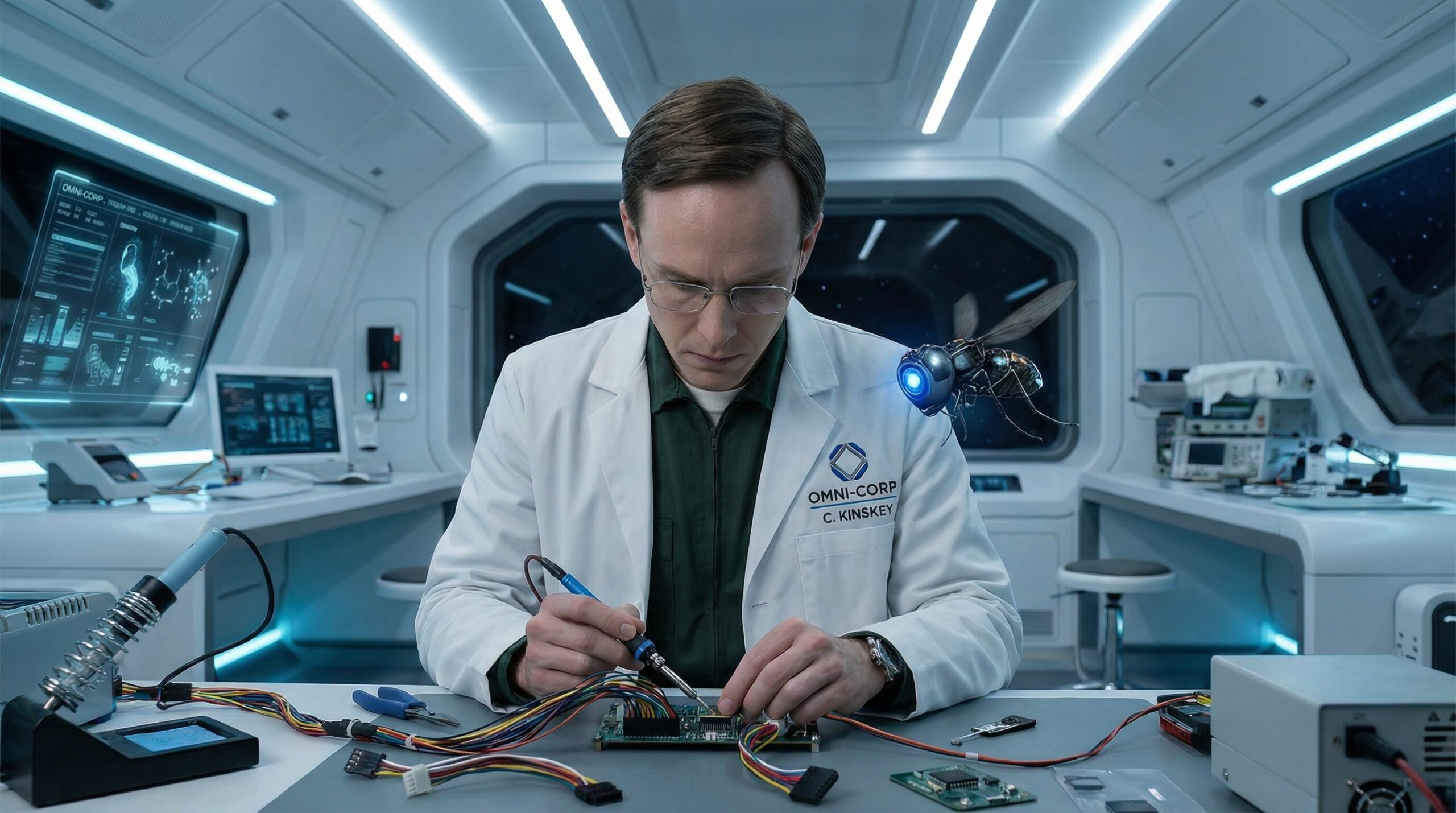
    He worked quickly, calibrating his chemical synthesizer. He inputted the genetic profile he had extracted from the Kaelen creature weeks ago. The machine whirred, mixing specific anti-fungal agents with a localized neuro-inhibitor. A few minutes later, the machine dispensed a small vial of clear liquid.

    Claude transferred the liquid into a standard, plastic nasal spray bottle.

    He held the bottle to his right nostril and inhaled sharply, depressing the pump. The liquid burned the back of his sinus cavity. He repeated the process on the left side.

    Within seconds, the tightness in his chest evaporated. The shadows in the corner of the lab returned to being just shadows. His mind felt completely his own.

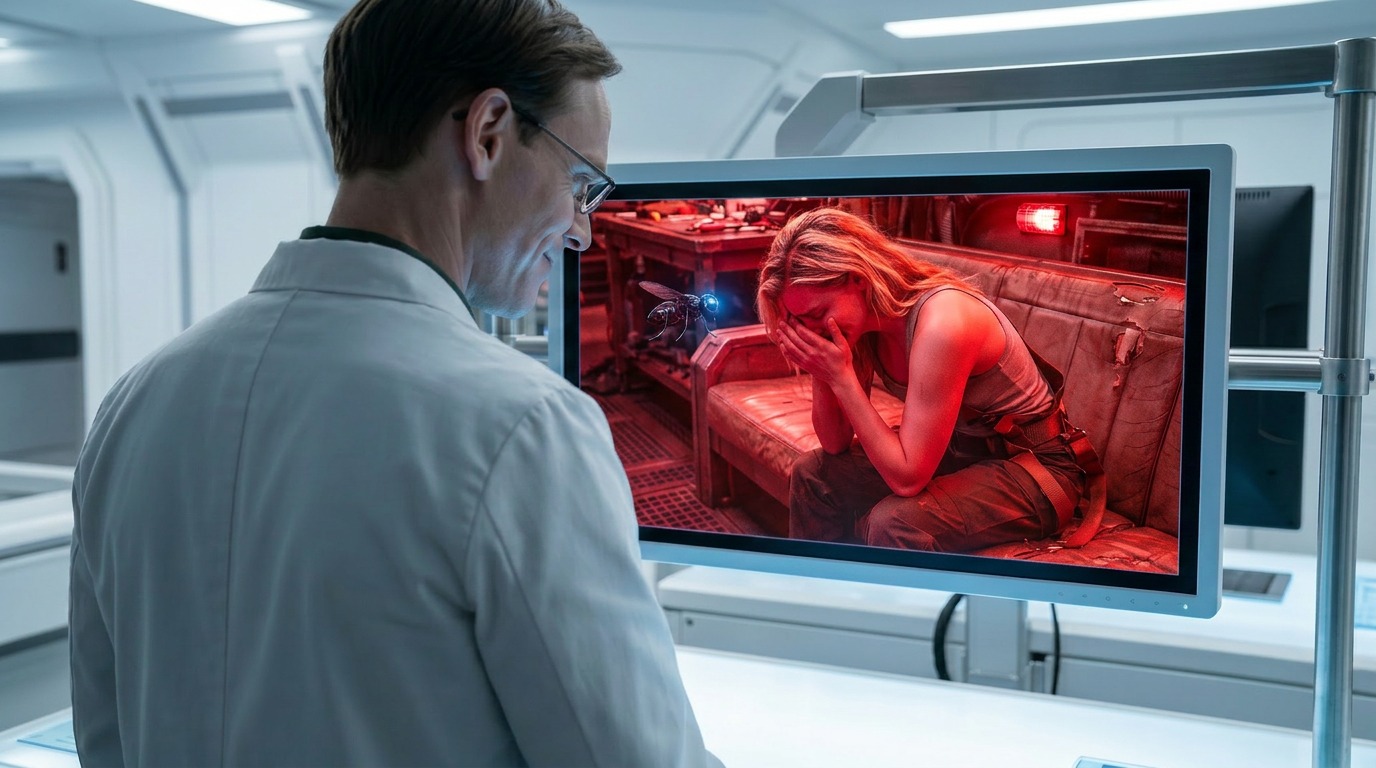
    Claude slipped the nasal spray into the pocket of his lab coat. He looked at the external monitor showing Helen retreating to her quarters. He smiled.

    A looping video of an Omni-Corp Agricultural crate leaking.

  • 14 Structural Integrity – Chapter 14

    14 Structural Integrity – Chapter 14

    Draft 2

    Month 2, Day 14: The Dead Zone

    For weeks, Helen and Claude had played a digital tug-of-war over the ship’s power grid. Every time Helen routed amperage away from Cargo Bay 4 to stabilize the slipping containment fields, Claude locked her out, throwing up a firewall stamped with a “Level-1 Quarantine” warning.

    Sitting at her engineering terminal, bathed in the blue glow of the screens, Helen rubbed her tired eyes. The Persephone was deep in the Dead Zone now. The constant, low-frequency vibration of the slip-drive was the only reminder that they were moving at all.

    Sick of the science officer’s insubordination, Helen pulled up the Omni-Corp delivery mandates for Tartarus Colony, looking for a loophole. She found one, but it didn’t make sense. According to corporate law, any payload placed under a genuine Level-1 Quarantine required mandatory incineration upon docking to protect the destination planet. If the terraforming kits burned, the crew forfeited their payout. Claude hadn’t filed a real quarantine with corporate before they lost comms; he was just using the ship’s internal system to keep her out.

    Determined to expose the lie and cut the power drain at the source, Helen marched down the port-side corridor to the primary bulkhead of Cargo Bay 4. She punched her Chief Engineer override into the keypad.

    The panel buzzed. The screen flashed a custom, rotating encryption. Claude had severed the door from the ship’s mainframe.

    Helen glared at the red light. She didn’t know how to hack it.

    She unclipped the hydrospanner from her utility harness and bypassed the primary doors entirely, walking down the hall to an auxiliary maintenance hatch set a foot above the deck plates. She wedged the head of the tool into the seam and thumbed the micro-hydraulics. The tool whined, applying torque to the locking mechanism. With a sharp crack, the physical latches gave way.

    Helen pulled the grate open and crawled inside.

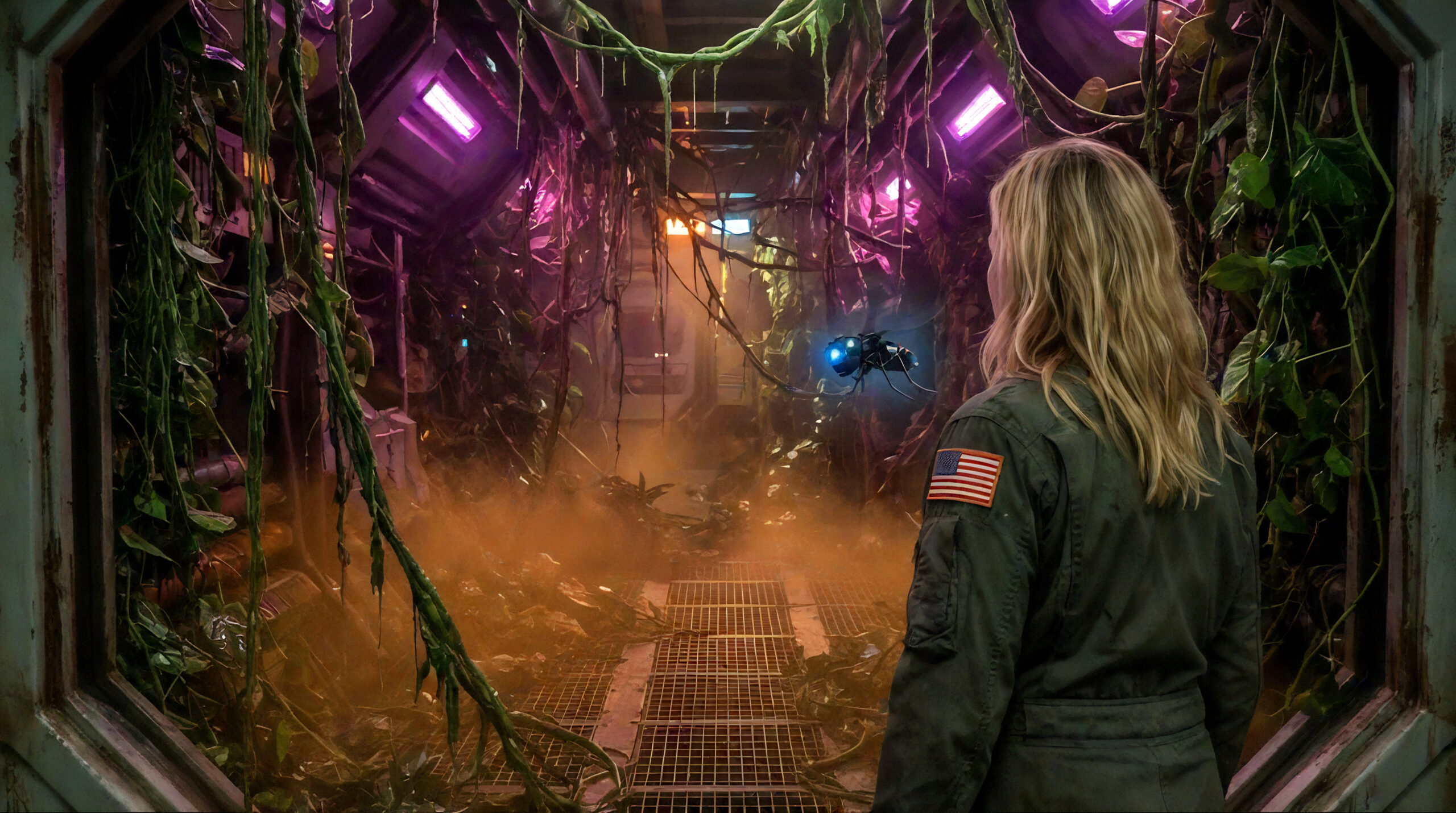
    The environment of Cargo Bay 4 was not the sterile, climate-controlled greenhouse it was supposed to be. Instead, it was a sweltering jungle. Claude had pushed the terraforming equipment into dangerous overdrive. Massive vats of hyper-algae were blooming, spilling wet, green vines over the metal walkways.

    An amber-tinted fog clung to the deck. It wasn’t coming from the standard terraforming equipment. The haze was rolling out from the base of a large, heavily frosted agricultural crate nestled deep between the algae vats.

    The air carried a sickly-sweet odor that burned the back of her throat.

    Transitioning from the cold corridor, Unit Seven’s metal casing instantly attracted the moisture in the air. Condensation coated his chassis in seconds. He detached from her shoulder, his rotors whining as they fought the sudden accumulation of water droplets.

    “Madam, ambient humidity exceeds ninety percent. My unsealed servo-joints are highly vulnerable to short-circuiting in these conditions. Furthermore, my sensors register a spike in unidentified organic particulate in this atmosphere.”

    Helen breathed in the air. It tasted of overripe fruit.

    Instantly, an irrational dread washed over her, making her hands shake. Sweat prickled across her forehead. Her brain screamed at her to run, even though she couldn’t see anything dangerous through the thick vines and fog.

    “I just need to get to Humidifier 7B.” Helen pushed her way through the dripping vegetation toward the back of the bay where the frosted crate sat.

    She didn’t make it three steps.

    Her forced entry registered on the room’s environmental sensors. A siren sounded, and the airtight blast shutters bolted to the ceiling began sliding down over the walls to prevent the bay’s atmosphere from escaping into the rest of the ship.

    Helen spun around. The shutter over her maintenance hatch was dropping fast.

    Then she heard it. Beneath the mechanical grinding of the shutters, a weight-bearing thud echoed from inside the crate behind her.

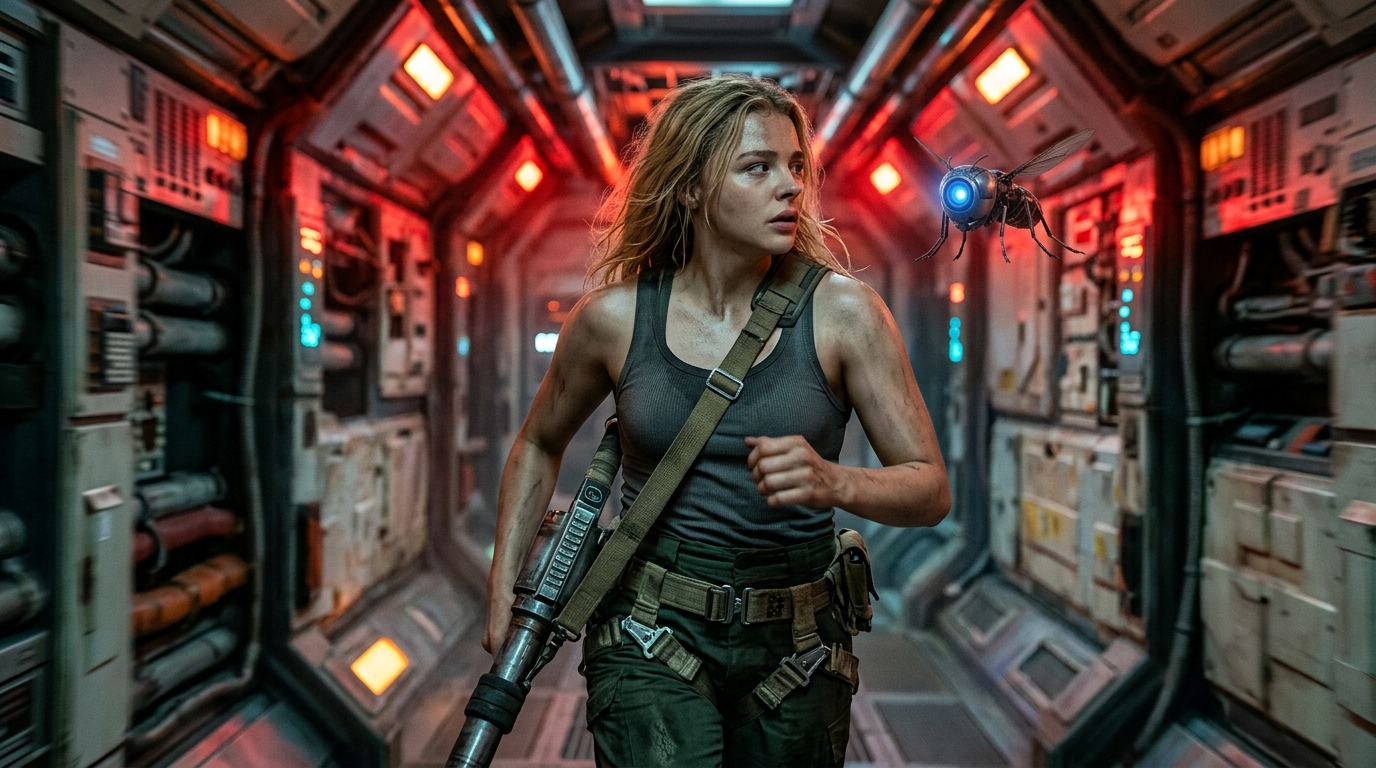
    A wave of terror seized her. It didn’t make sense, but the air felt suffocating. Through the haze, the shadows cast from the algae vats seemed to warp into predatory shapes. Convinced something was right behind her, reaching for her through the fog, Helen abandoned the search for the humidifier and sprinted for the shrinking gap of the hatch.

    She dove headfirst, just behind Seven. She squeezed through just as the heavy shutter slammed down. The metal edge caught her shoulder, tearing her jumpsuit and scraping off a layer of skin. The hatch sealed shut behind her with a clank.

    Helen collapsed onto the cold floor of the corridor, gasping for air. She held a hand over her torn shoulder, feeling the warm stickiness of blood.

    Shaken, sweating, and struggling to control her breathing, she picked herself up. She needed a dermal patch, and she needed someone to tell her she wasn’t having a heart attack.

    She headed straight for the Med-Bay.

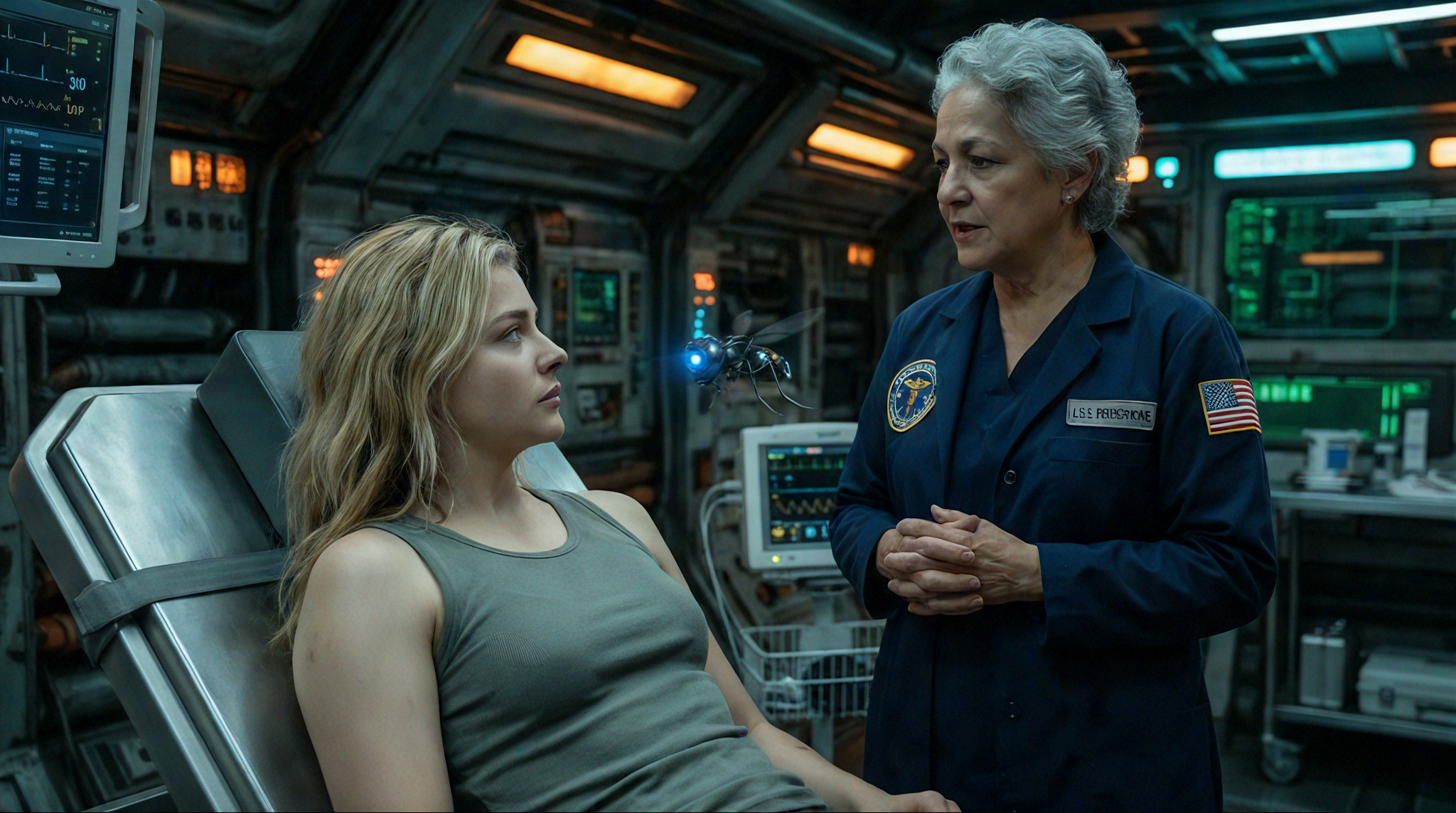
    The white lights of the medical wing felt blinding after the dark corridors. Janet was sitting at her console. The medical officer looked unusually haggard, with dark circles under her eyes.

    “Helen?” Janet stood when she saw the torn jumpsuit and pale, sweating engineer. “Sit down. What happened?”

    “It was the maintenance hatch,” Helen said, climbing onto the examination table. “I just need a patch.”

    Janet didn’t reach for the bandages. She frowned at Helen’s shallow breathing and pulled the automated crescent-scanner down from the wall. “Hold still.”

    The device swept over Helen’s upper body. Instead of the usual green clearance light, the medical console chimed with a yellow warning.

    Janet picked up her datapad. “Helen, your blood pressure is through the roof. Your cortisol levels are peaking, and your amygdala is hyper-stimulated.”

    “My what?”

    “Your amygdala. The fear center of your brain. It controls your fight-or-flight response. Your internal chemistry looks like you just survived a high-speed collision.”

    “I . . . I got spooked. I broke into Bay 4. Claude has the heat cranked up, and there’s a fog, and . . . I heard something. A noise that shouldn’t have been in there. It felt like something was in there with me.”

    Helen knew she sounded irrational.

    Janet set down the datapad. She grabbed an antiseptic wipe and gently cleaned the scrape on Helen’s shoulder, applying a dermal patch over the broken skin.

    “There are no standard toxins in your blood. Just elevated adrenaline. Helen, the ship is old. It makes noises. You’ve been fighting with the science officer for weeks, your husband has locked himself in the cockpit with the pilot, and we are completely cut off from Earth.”

    “I know what it sounds like. But the panic I felt wasn’t normal. It hit me all at once.”

    “That’s how panic attacks work.” Janet turned to a secure cabinet and pulled out a small plastic bottle. “It’s Dead Zone fatigue. Severe cabin fever. Your body is processing the stress of the isolation and the marital strain, and it’s manifesting as physical terror.”

    Janet pressed the bottle into Helen’s hand. “These are mild synthetic sedatives. Take one now. Go to your quarters and get some actual sleep.”

    Helen looked at the bottle. She wanted to argue, to demand Janet run a deeper scan because it felt like she had inhaled something toxic in the fog, but the exhaustion was catching up to her. She nodded, popping the cap and swallowing one of the pills.

    “Thanks, doc.”

    “My door is always open.”

    Helen stepped back out into the dimly lit corridor. She walked slowly toward the crew quarters, waiting for the sedative to dull the sharp edges of her anxiety. But as she moved through the ship, listening to the hiss of the air vents, the creeping paranoia refused to fade. She kept looking over her shoulder, feeling like her own mind was turning against her.

    A looping video of Helen, stunned to find the greenhouse has turned into a jungle.

  • 13 Structural Integrity – Chapter 13

    13 Structural Integrity – Chapter 13

    Draft 2

    Month 2, Day 2: 08:00 hours. The Persephone.

    Helen walked down the port-side corridor, keeping pace with Janet and Magnus next to her.

    “I swear to everything holy, my teeth are vibrating.” Magnus pressed the heels of his hands against his temples, his gait stiff.

    Janet held a medical scanner up to his neck. “That’s what happens when you drink a beverage brewed in a subterranean mining colony. It wasn’t whiskey, Magnus. You essentially paid for flavored industrial solvent. Next time, pay more attention to what you’re drinking.” She lowered the device and tapped the screen. “As soon as we clear the docking ring and we’re on our way, meet me in the med-bay. I need to hook you up to an IV and flush those toxins out before your liver completely shuts down.”

    “That solvent cost me fifty credits a glass.” Magnus winced as the overhead lumen-strips sputtered. “My wallet hurts worse than my head.”

    Unit Seven hovered over Magnus’s right shoulder, his blue optic zooming in and out.

    “Medical Officer Wilson is correct. My chemical analysis of your exhalations indicates a forty-two percent match with the active ingredients found in standard Omni-Corp engine degreaser. I strongly advise against standing near any open sparks. Your blood-alcohol content is currently flammable.”

    “Shut up, you flying toaster.” Magnus swatted at the drone.

    Seven easily ducked the swipe and zipped over to Helen’s shoulder. “Humans possess a fascinating drive to poison themselves for recreation. I will prepare a fire extinguisher just in case.”

    Helen laughed.

    “Don’t encourage the drone, Chief,” Magnus said. “And for the record, I wouldn’t have been drinking the fifty-credit engine wash if I hadn’t lost my spending money at the betting tables in Sector Two.”

    Janet sighed. “You bet your hazard pay against frontier ice-miners? I should be scanning your brain, not your liver.”

    “It was rigged. Those magnetic dice were loaded. I know it.”

    Seven pivoted in the air to face Magnus again. “Statistically, the house edge in unregulated Charon betting parlors sits at roughly eighty-nine percent. Factoring in local corruption, you would have yielded a higher return on investment by throwing your physical credits directly into the ship’s primary incinerator.”

    “I really am going to dismantle you,” Magnus grumbled.

    “He has a point,” Helen said. “Next time, stay on the ship and drink the synthesizer ale. It tastes like wet paper, but it won’t melt your stomach lining.”

    “I just wanted one good night before we hit the void. Months of nothing but the slip-drive hum and corporate nutrient paste. A guy needs a memory to hold onto.”

    Janet slipped her medical scanner into her scrub pocket. “Some of us managed to make pleasant memories without suffering acute chemical poisoning. I found a hydroponic vendor near the medical exchange. I traded some synthesized antibiotics for real chamomile tea leaves. I plan to brew a proper cup the second we cross the solar boundary.”

    The door to the starboard elevator slid open ahead of them. Claude stepped out into the corridor.

    “Morning, Dr. Kinskey,” Janet said.

    “Good morning, Medical Officer.” Claude nodded politely and fell into step beside them.

    Magnus squinted at him. “You look pretty shiny for a guy who just spent two days on a frozen mining rock. Did you find a corporate spa down in the slums?”

    “I found a quiet corner to conduct my business, Mr. Cantarini. I leave the recreational self-destruction to the manual laborers.”

    Magnus stopped walking. “What’s that supposed to mean?”

    “It means we have a launch window to catch.” Helen stepped between them. “Let’s get to the bridge.”

    Magnus glared at Claude’s back as the science officer continued down the hall and into Flight Command.

    The bridge was alive with the hum of active consoles. John sat in the captain’s chair, and beside him, Ingrid was running the pre-flight thruster checks.

    “I’m just saying, John,” Ingrid said, pulling back on the gyro-yoke to test the tension. “If we had stayed at The Last Drop for one more round, Higgins would have tried to charge us double for the docking fees. Good thing you dragged me out of there when you did.”

    John chuckled. “Higgins is a pirate with a clipboard. You have to know when to fold your cards with him, Ingy.”

    Helen took her seat at the engineering station behind them. “Engineering is present, Captain.”

    John spun his chair around and smiled at her. “Glad you could join us. How are my fuel tanks?”

    Helen pulled up her schematics. “Full. Even with the purging, we’ve got enough cryo-fuel to run the slip-drive for six months straight.”

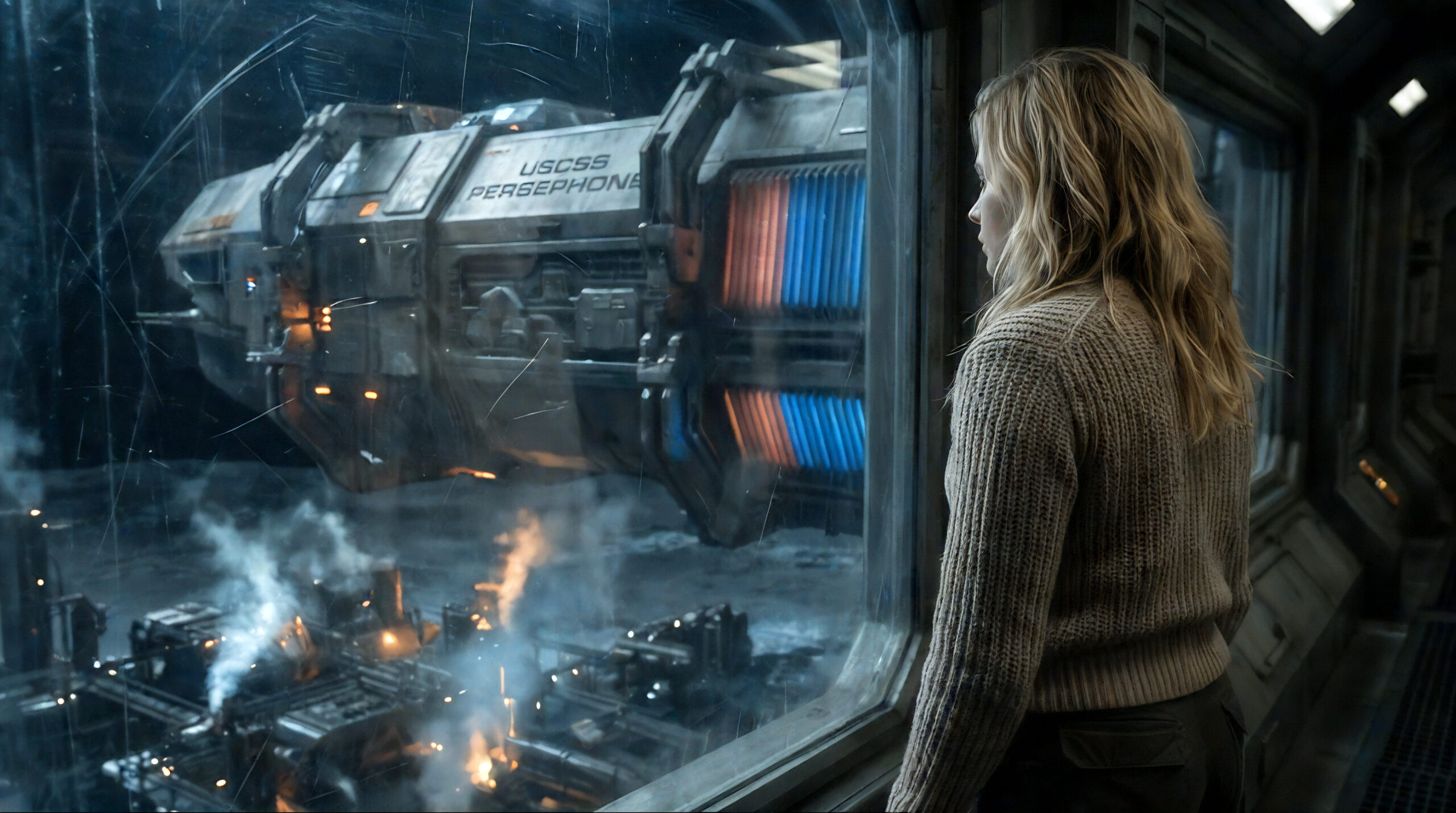
    “Excellent.” John turned back to the viewport. Outside the hyper-glass, Charon Outpost was a jagged wall of gray rock and ice, dotted with thousands of industrial floodlights.

    “All stations, lock in,” John said. “Gyros are stable. Slip-drive is spooled to eighty percent and holding.”

    Ingrid flipped a row of toggles above her head. “Charon Control, this is the Persephone. Requesting umbilical release and departure vector.”

    A static-laced voice crackled over the bridge speakers. “Copy, Persephone. Clearance codes accepted. Detaching umbilicals now. Safe travels, Captain. See you on the trip back.”

    Beyond the viewport, the frost-covered hoses clamped to the ship’s hull released. The Persephone groaned as the clamps retracted. Without the outpost’s gravity tethers holding them steady, the freighter swayed like a heavy ship hitting open water.

    Helen flipped the main breaker. “Switching to internal power.” Her board lit up. For a split second, the air scrubbers kicked on high, pushing a gust of air through the bridge vents. The air smelled damp at first, but the scrubbers quickly leveled out, returning the climate to a sterile neutral.

    “Thrusters engaged,” John said.

    The physical force of the main engines pushed Helen back into her seat. Through the viewport, Charon Outpost began to drift backward.

    “Pitching up four degrees,” Ingrid said. “Clearing the moon’s gravity well.”

    Helen watched her monitor as the dark-matter reactor hit its stride. The ship shuddered, the vibration rattling the coffee cups in their holders, and then smoothed out as they broke into open space.

    Charon shrank rapidly, transitioning from a gray sphere to a tiny speck of light against the infinite black.

    The radio channel, which had been filled with the background chatter of dockworkers, mining rigs, and outbound freighters, slowly dissolved into static.

    John reached up and killed the comms channel.

    Unit Seven unlatched from the console and hovered up to Helen’s eye level.

    “Madam.” Seven’s audio feed routed into her earpiece. “Long-range telemetry has officially dropped to zero. We have lost all contact with Earth relays and Charon Outpost.”

    Helen looked at the viewport. No stars passed by, there was only the swirling distortion of the slip-stream.

    “I know, Seven.”

    “We have entered the Dead Zone. We are entirely isolated. Current estimated time until we can transmit or receive an external communication is one hundred and eighty-two days.”

    Helen stared out the viewport. Six months. Millions of miles of empty, radiation-soaked space between them and the next colony.

    If anything went wrong out here, there would be no distress calls. They were entirely on their own.

    A looping video of the Persephone navigating slip-space within the Dead Zone.

  • 12 Structural Integrity – Chapter 12

    12 Structural Integrity – Chapter 12

    Draft 2

    Month 1 (Day 30, 22:00 hours). The Persephone.

    At forty-one degrees Fahrenheit, the lower logic hub was a freezing metal coffin. Helen pushed the micro-probes into the primary breaker panel.

    “Madam, the automated failsafe is initializing,” Unit Seven warned from near her shoulder. “Cargo Bay 4 will be completely severed from the power grid in forty seconds.”

    “Not if I blindfold the computer first.”

    Helen gripped the primary breaker and ripped it open, temporarily severing the connection to the ship’s mainframe. She jammed her hydrospanner into the gap, bypassing the automated relay and manually bridging the circuit with a copper shunt.

    Sparks showered over her. The ship’s subsystems smoothed out into a steady hum.

    She checked her wrist-console. The warning lights flickered from red to green. She had forced the grid to accept the power draw without tripping the slip-drive’s failsafes.

    “Manual bridge successful, Madam. Power flow is stabilized, though operating at ninety-nine point eight percent of the secondary grid’s maximum capacity. It is a highly precarious balance.”

    “It’ll hold,” Helen said as she packed her tools. She climbed back up into the ship’s habitable zones.

    As she brushed dirt from herself, she saw Claude Kinskey strolling toward her.

    The Chief Science Officer pushed an empty anti-gravity loader-cart in front of him.

    “Helen.” Claude politely nodded as he prepared to pass her. “Working late, I see.”

    She stepped sideways, physically blocking his path.

    Claude stopped the cart and looked at her.

    “What did you plug into the grid? And don’t tell me it was a humidifier.”

    “I assure you, I have no idea what you mean.”

    “Don’t play dumb with me. I just spent the last half hour in the logic hub because Cargo Bay 4 tried to pull enough raw amperage to trigger a ship-wide failsafe. Something in that bio-dome nearly shut down the slip-drive’s containment field.” She gestured to his empty cart. “Did you bring unauthorized cargo aboard?”

    Claude adjusted his glasses. “I brought aboard highly sensitive, classified Omni-Corp research materials. As you know, our terraforming mandates often require the transportation of experimental botanical samples. The initialization of their localized stasis fields requires a temporary, albeit significant, surge in power. I logged it with the dockmaster.”

    “You didn’t log it with Engineering. You don’t splice into my grid without a requisition form. If you had blown that relay, we would have lost all climate control in the lower decks.”

    Claude sighed with condescension. “I am operating under Level-1 corporate non-disclosure agreements. My work is beyond your purview. Your job is to keep the lights on and the engine running. I suggest you focus on your wrenches and leave the science to me.”

    Before Helen could fire back, Claude effortlessly guided the hovering cart around her and continued down the corridor.

    Helen stood there. She hated the Omni-Corp suits. They always hid behind corporate protocol and expected the blue-collar crew to just mop up their messes.

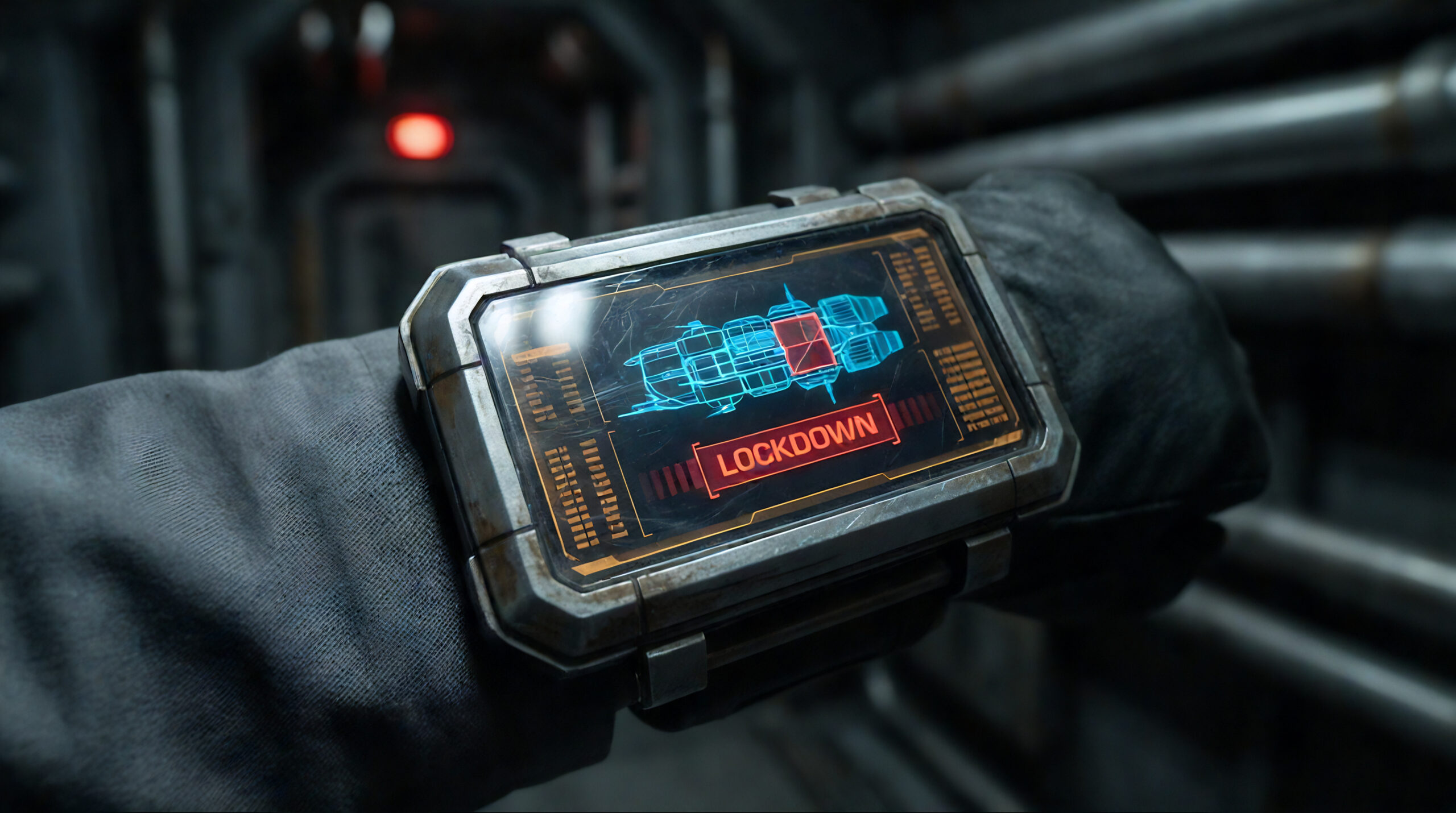
    She tapped her wrist-console, pulling up the schematic for Cargo Bay 4. Sure enough, the primary access doors glowed red. Kinskey had just initiated a Level-1 Quarantine lockdown on the entire bio-dome.

    “Madam, your heart rate is—”

    “I know, Seven.” Helen rubbed her temples.

    She could use her Chief Engineer override to force the doors open, march straight down to Cargo Bay 4, and see exactly what kind of “botanical sample” required enough power to run a small city block. But she needed rest. She didn’t have the energy for a turf war with the science officer tonight.

    “Seven, I need you to do something for me.”

    “Awaiting instructions.”

    “Kinskey just locked down Cargo Bay 4, and I’m too tired to go down there and fight him for the override codes right now. I want you to go into the ventilation system. Bypass the primary seals and slip into the bio-dome. Tell me exactly what he hooked up to Humidifier 7B.”

    “Executing covert surveillance.” Seven zipped upward, slipping through the slats of the ceiling grate.

    Helen leaned against the bulkhead, listening to Seven navigate the ductwork. She debated whether to stay up and wait for John to return or get something to eat and go to bed.

    “I have visual access to Cargo Bay 4,” Seven said in her earpiece.

    “What do you see? Did he bring aboard a secondary cryo-tube?”

    “Negative, Madam. I am looking at a standard Level-5 Omni-Corp agricultural transport crate. It is stamped with the company’s green leaf logo. It is currently nestled between two vats of oxygen-producing hyper-algae.”

    “Just a crate? Nothing else?”

    “Visually, it appears to be standard terraforming equipment. However, my thermal and electrical scans indicate highly suspicious anomalies.”

    “Define anomalous.”

    “Science Officer Kinskey has spliced industrial-grade microcontrollers directly into the humidifier’s power supply to feed this crate. Furthermore, the crate is drawing a massive amount of cryo-coolant from the ship’s primary veins. Statistically speaking, unless Dr. Kinskey is attempting to cultivate an ice-age redwood, this power draw is illogical for standard flora.”

    Helen rubbed her shoulder. “He’s hiding something in there.”

    “Indeed. The power and coolant draw has been meticulously calibrated. It is hovering exactly zero point two percent below the automatic shutdown threshold. It is a masterpiece of electrical parasitism.”
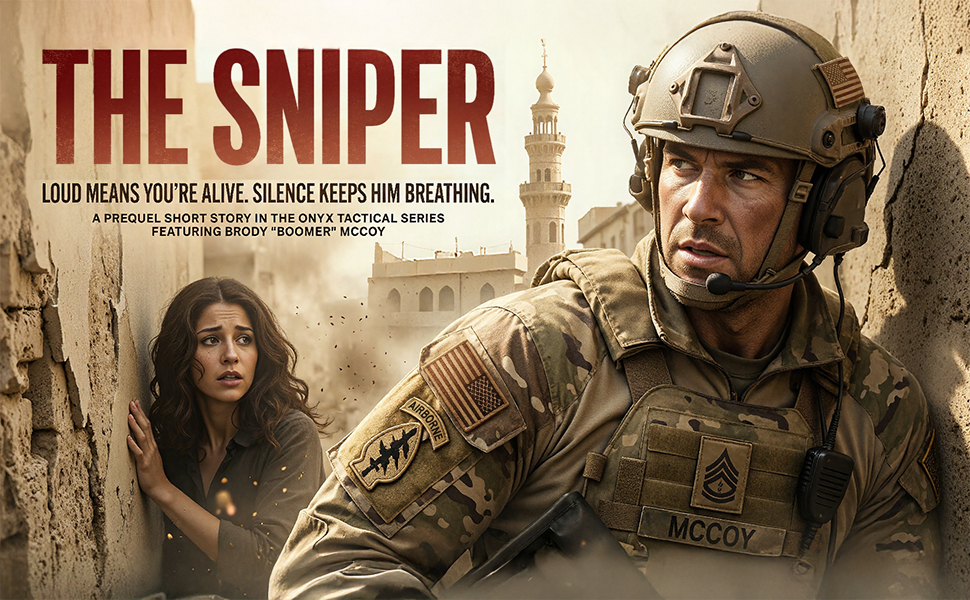
    A masterpiece of parasitism. It was arrogant, dangerous, and completely on-brand for an Omni-Corp researcher. If it was corporate contraband, an experimental bio-weapon, or just highly illegal black-market seeds, it wasn’t her problem. As long as her grid held, the Persephone would fly.

    “Leave it alone, Seven. We have the grid stabilized. Return to me.”

    “Acknowledged.”

    Helen pushed herself off the wall. She was officially done for the night. They still had plenty of time left of their layover before they broke orbit for the Dead Zone, and she was not going to spend it chasing Claude Kinskey’s dirt-samples.

    She made her way back to Engineering first. She unbuckled the utility harness, letting the hydrospanner and micro-probes clatter onto her workbench. Then she unzipped the coat and hung it on its designated hook by the door.

    Leaving the workshop, Helen walked up to the main deck and headed for the mess hall. The room was empty and dark. She punched a sequence into the synthesizer and waited as the machine spit out an unappetizing bowl of synthetic beef stew.

    Carrying her bowl, she made the short walk down the hall to the Captain’s quarters.

    The door slid open and Helen walked inside. She set her food on the desk and collapsed onto the edge of the bed. She looked at the photograph of the salvage rig taped to the wall. The dream.

    She pulled the bowl of stew onto her lap. The ship was docked, stable, and quiet. But as Helen ate her stew alone, something felt off, but she couldn’t put her finger on it.

    A looping video of Helen noticing a Level-1 Quarantine lockdown.

  • 11 Structural Integrity – Chapter 11

    11 Structural Integrity – Chapter 11

    Draft 2

    Month 1, Day 30: 20:00 hours. Charon Outpost Black Market. POV: Claude

    Claude Kinskey halted his anti-gravity cart to avoid a dripping puddle of iridescent blue slush.

    The subterranean maintenance tunnels of Charon Outpost were offensive. The air was thick with the stench of sulfur and vented plasma. The flickering lumen-strips cast a yellow glow over the corroded pipes lining the walls.
    Claude adjusted the cuffs of his white lab coat. He despised this moon, the unwashed ice-miners, and their inefficient frontier living. But true wealth required temporary discomfort.

    He pushed the hovering loader-cart around the puddle. Its quiet hum was the only civilized sound in the tunnel.

    Ahead, the corridor dead-ended into Auxiliary Pump Station 42, an abandoned sector far off the Omni-Corp customs grid. Standing by a blast door were three men. Two of them were heavily muscled mercenaries holding magnetic shock-rifles.

    The third was Rusk.

    The smuggler looked dreadful. His cybernetic left eye whirred erratically, and his hands were shoved deep into the pockets of his thermal coat.

    Between the men sat an Omni-Corp agricultural transport crate. It was rectangular, and stamped with the company’s green leaf logo. But Claude knew the crate was merely a shell.
    “You’re late, Kinskey,” Rusk said.

    “I am precisely on time.” Claude brought the cart to a smooth halt. “It is not my fault your internal chronometer is as poorly maintained as your hygiene. Open the casing. I need to verify the integrity of the containment seal.”

    Rusk hesitated, glancing at his two mercenaries. He stepped forward and punched a code into the crate’s side panel.

    With a hiss of depressurization, the metallic wall of the crate retracted, folding downward to reveal the true container nestled inside.

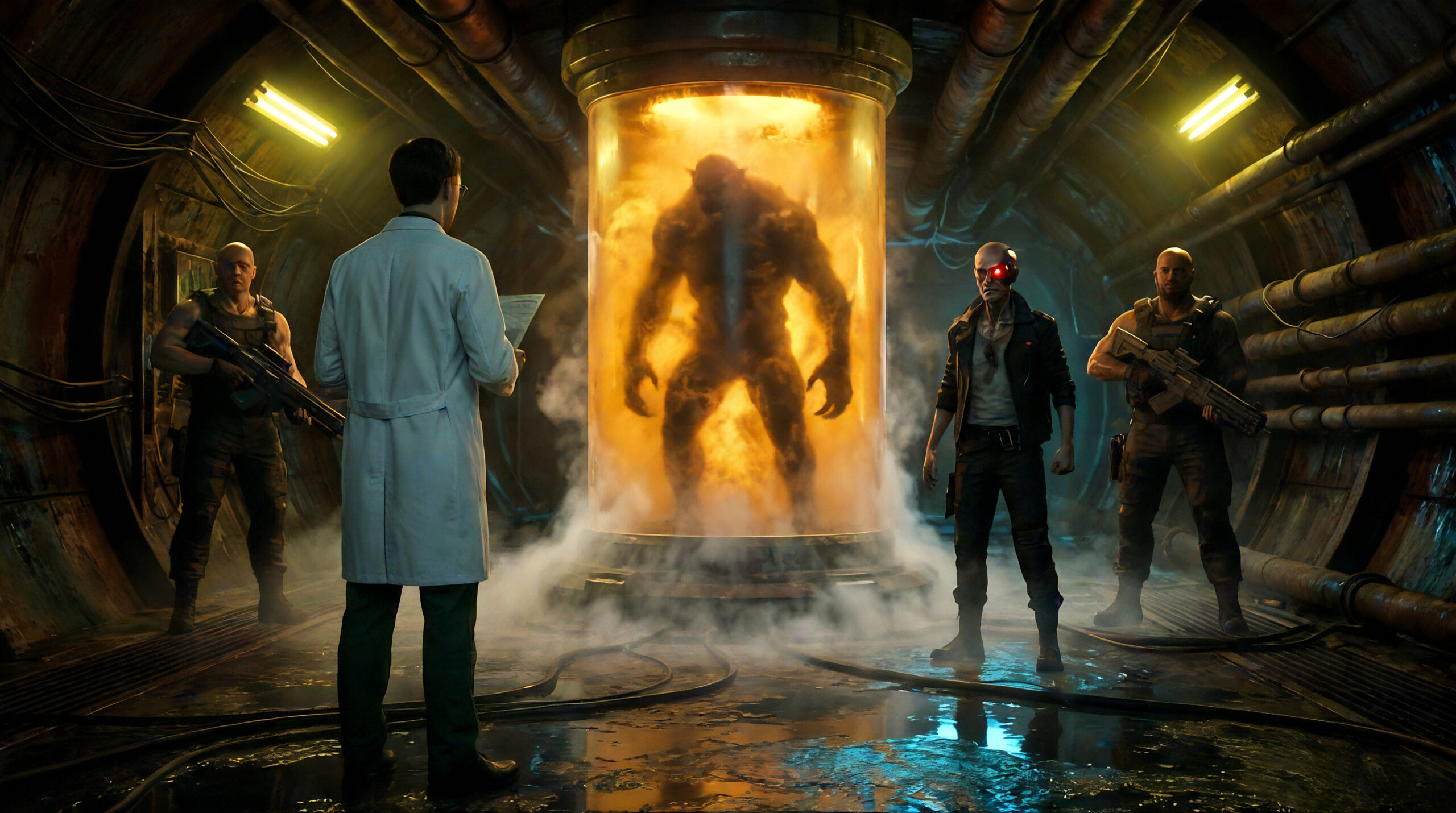
    It was a Level-5 Bio-Stasis Cylinder. Standing eight feet tall and constructed of reinforced, three-inch-thick hyper-glass, the cylinder was heavily frosted over. Plumes of freezing vapor rolled off its base, pooling on the floor. Thick, industrial coolant hoses wrapped around the glass like veins, pumping high-pressure, freezing gas into the chamber.

    Inside the frosted glass, the stasis medium wasn’t a liquid, it was a swirling storm of amber-colored cryogenic vapor. Through the fog, a hulking, dark silhouette was barely visible in the haze.

    Claude stepped closer. He felt genuine excitement. Magnificent.

    “The biometrics are stable?” Claude looked at the cylinder’s base.

    “They’re holding.” Rusk stepped back from the freezing vapor. “But the price isn’t. I’m adding a twenty percent markup to our agreed sum.”

    Claude turned his head away from the cylinder. He looked at the smuggler with mild annoyance. “We negotiated a sum of twenty-five million untraceable credits. I do not renegotiate, Rusk.”

    “Things changed.” Rusk spat, gesturing toward the frosted cylinder. “My acquisition team pulled this . . . this thing out of a subterranean cavern on an uncharted rock just past the Kaelen system. I sent six men down there. Two came back.”

    “An acceptable mortality rate for black-market fauna retrieval.”

    “They didn’t just die.” Rusk pointed a trembling finger at the pod. “That thing wasn’t fully under when they loaded it. It spit something. Acid. Melted through standard poly-armor like wet tissue paper. Dax died screaming while his chest dissolved. It took three doses of neurotoxin just to get it in the chamber.” Rusk shook his head. “It’s cursed. Whatever it is, it ain’t natural. I want the twenty percent hazard fee, or I vent the cylinder right now and walk away.”

    At Rusk’s signal, the two mercenaries moved forward, raising their shock-rifles. They were trying to be intimidating. Claude found it quaint.

    Claude didn’t flinch. Instead, he looked down at the floor, specifically at a small puddle of chemical runoff leaking from the station’s pipes.

    “Rusk. Are you familiar with the chemical properties of unrefined Charon ice-slush when it reacts with the alkaline residue from your boots?”

    Rusk’s cybernetic eye zoomed in and out. “What?”

    “I am a Chief Science Officer for Omni-Corp.” Claude clasped his hands behind his back. “I possess an intimate understanding of molecular biology and hazardous chemistry. For instance, I know that if I were to drop the ionized power cell from my datapad into that puddle you are standing in, it would create an immediate, localized cloud of highly concentrated hydrogen sulfide gas.”

    The mercenaries shifted uncomfortably, glancing down at their feet.

    “The gas would sear your corneas instantly. Following the blindness, the gas would strip the lining of your respiratory tracts. You would essentially drown in your own dissolved lung tissue in seconds. Long before you could pull those triggers.”

    The tunnel was dead silent, except for the low thrum of the bio-stasis cylinder.

    Claude stepped forward, looking directly into Rusk’s organic eye. “Furthermore, the encrypted Omni-Corp orbital clearance codes that allow your little smuggling ring to bypass customs? I am the one who generates them. If you attempt to extort me, not only will I liquidate you and your muscle right here, but your entire operation will be grounded and raided by corporate security within the hour.”

    Rusk swallowed hard.

    “So.” Claude pulled a datapad from his lab coat pocket. “I am going to transfer the twenty-five million credits. But first, you and your men are going to help me load my property onto this cart. Do we have an understanding?”

    A moment later Rusk signaled the mercs to stand down. “Yeah. We have an understanding. Get it on the cart, boys. Quickly.”

    Rusk reached out and punched a sequence into the crate’s side panel. With a hiss of pressurized air, the metallic walls folded back up and locked into place, sealing the frosted cylinder and the swirling gas safely out of sight.

    Even with the anti-gravity cart lowered to the floor, it took all three smugglers grunting and straining to physically shove the transport crate onto the cart’s loading bed. The cart’s suspension took the weight, and the magnetic locks engaged.

    Claude stood safely out of the way, watching them with an approving smile.

    “Excellent.” Claude tapped the screen of his datapad.

    A moment later, Rusk’s wrist-console chimed with the confirmation of the deposit. Without another word, the smuggler and his hired guns practically sprinted back down the corridor.

    Claude was alone.

    He stepped up to the hovering cart and patted the side of the metal crate. It was a perfect disguise. To the dockworkers, it would just be another piece of classified botanical equipment.

    He turned the cart around and began the long walk back up to the Persephone, his mind already calculating the logistics. Cargo Bay 4 was perfect. He had already spliced the microcontrollers into the secondary grid. He would wire this cylinder directly into Humidifier Unit 7B’s power supply. The enormous energy signature of the bio-dome’s terraforming kits would completely mask the power draw of the cryo-pod.

    His plan was flawless. The apex predator would sleep peacefully for six months. When they arrived at Tartarus Colony, his private buyer would be waiting. He would be richer than the Omni-Corp board of directors.

    Claude thought briefly of the Persephone’s crew.

    Captain Mitchell was already drowning in corporate stress, isolating himself on the bridge. Helen, the brilliant but insecure engineer, was distracted by her husband’s distance. They were so wrapped up in their little domestic drama that they wouldn’t notice a thing.

    If the stasis seal somehow failed in the Dead Zone . . . well. Claude patted his breast pocket, feeling the small vial of synthesized antidote he had developed from the creature’s initial genetic profile. He was protected from the paranoia-inducing spores.

    If the crew succumbed to the spores, or if the creature woke up hungry, it made no difference to him. Claude Kinskey was a man of science, and to him, the crew of the Persephone were nothing more than acceptable collateral damage.

    He pushed the cart into the shadows, smiling.

    A looping video of Claude, smugglers, and the monster.

  • 10 Structural Integrity – Chapter 10

    10 Structural Integrity – Chapter 10

    Draft 2

    Month 1, Day 30: 21:15 hours. Charon Outpost Slums. POV: Helen

    Helen walked through the packed dance floor of The Last Drop, her boots sticking slightly to the spilled synth-ale.

    The throb in her shoulder was coming back and her toes stung from John’s clumsy rendition of the “Slip-Drive Shuffle.” Every step toward the exit was a reminder that while the rest of the crew was starting their shore leave, her shift was far from over.

    At the bulkhead doors that led out into the slums, Helen paused. She couldn’t help herself. She rested her hand on the release lever and looked back over her shoulder through the dim, violet haze of the bar.

    She half-expected to see John watching her go, maybe offering a sympathetic wave.

    Instead, he was back in the booth, sitting across from Ingrid. Helen couldn’t hear them over the thumping bass of the sound system, but saw Ingrid raise her glass and say something that made John laugh. He looked happy.

    A pang of isolation struck Helen. It wasn’t a feeling of betrayal. She trusted John. She knew he loved her. But as she watched the two of them—the Captain and his First Officer enjoying each other’s company—she felt entirely left out. She felt like the hired help. She wanted to be back in the booth, pretending the universe didn’t exist.

    He’s been carrying the weight of the entire ship for a month, she thought. He deserves to blow off some steam. They’re just . . . old friends. Let him have a night off.

    Helen shoved the door open and stepped out into Sector 4.

    The thumping music of the bar was replaced by the roar of underground refineries. The recycled air of Charon Outpost desperately needed a filter change.

    Overhead, the neon holograms advertised cheap lodging and black-market betting parlors. Helen kept her head down, dodging past a group of off-shift ice-miners as she navigated the catwalks suspended over the outpost’s subterranean refining vats.

    Seeking a distraction from her thoughts, Helen reached up and tapped the comms unit.

    “Seven, are you awake?”

    A soft hum vibrated against her collarbone through the earpiece. “I am an artificial intelligence, Madam. I do not sleep. Though if I did, my rest would currently be disturbed by a highly irregular data stream.”

    “Ingrid said the internal sensors threw a critical error. What am I looking at?”

    “I am analyzing the telemetry now. There is a large, localized power draw on the secondary grid. The surge is localized entirely within the routing conduits leading to Cargo Bay 4.”

    “Cargo Bay 4? That doesn’t make sense. I recalibrated Humidifier 7B before we broke orbit.”

    “The current voltage requirement far exceeds standard humidifier operations, Madam. It is pulling enough raw amperage to trigger the ship’s automated failsafes. The main computer is preparing to cut all power to Cargo Bay 4 to protect the slip-drive.”

    Helen picked up her pace, leaving the crowded thoroughfare behind and turning down the sloping transit tunnel that led to the private freighter slips. “Omni-Corp will void our contract if those terraforming samples die. Did the dockworkers pinch a conduit while they were hooking up the umbilicals?”

    “Negative. The draw originates from within the ship.”

    “Then I have to lock the primary breaker open before the computer kills the power. Just prep the lower logic hub for my arrival.”

    “Acknowledged.” Seven paused. “Madam, I must point out a statistical anomaly. Captain Mitchell possesses the biometric clearance to execute a secondary bridge bypass from the cockpit. Why did he not accompany you? Furthermore, my behavioral database indicates that socializing with past romantic partners releases endorphins that—“

    “Mute the psychology, Seven.”

    “I am merely observing variables, Madam.”

    Helen shivered from the frigid air in the docking terminal. In the distance, the Persephone sat tethered to the fueling station. “I’ll be there shortly.”

    “Acknowledged. Awaiting your arrival.”

    By the time Helen reached the docking ring, where the Persephone was suspended by magnetic clamps, she wondered if the heat was working in the dock.

    Helen keyed her override code into the primary airlock. The door opened, and she stepped inside.

    The outer doors sealed shut behind her. The Persephone felt different when it was empty. Without the ambient noise of Magnus clanging his tools, Janet shuffling around the Med-Bay, or John’s voice over the intercom, the freighter became a ghost ship. The only sounds were the thrum of the main reactor and the cycling of the air scrubbers.

    A soft, mechanical whir broke the silence. Unit Seven hovered a few feet down the corridor.

    “Welcome back, Madam.” Seven’s voice shifted from her earpiece to his external micro-speaker. “I have unsealed the hatch to the lower logic hub as requested. I must warn you, with the ship’s life support currently operating on standby mode, the ambient temperature in the lower decks has dropped to forty-one degrees Fahrenheit. It will be highly unpleasant.”

    “Thanks, Seven. Let’s get this over with.”

    She followed him into the staging room and pulled an engineering coat over her clothes. Then she grabbed her utility harness, strapping the hydrospanner back onto her waist.

    Together, they walked to the access hatch leading down into the belly of the ship. Helen stood over the narrow maintenance chute. She was alone, exhausted, and about to crawl into the cramped underbelly of the ship to fix a technical anomaly that shouldn’t exist.

    She grabbed the rungs of the ladder and began her descent into the dark.

    A looping video of Helen in the tunnel overlooking Charon Outpost and Persephone—nothing like a solitary walk back to an empty ship at the edge of the solar system.

  • 09 Structural Integrity – Chapter 9

    09 Structural Integrity – Chapter 9

    Draft 2

    Month 1, Day 30: 1900 hours. Charon Outpost Slums.

    Stepping into Sector 4 of Charon Outpost was a sensory overload of neon lights. Helen squinted as holographic advertisements buzzed overhead, casting pink and green light across the metal walkways. The air had the metallic tang of vented plasma.

    She navigated the crowded thoroughfare, dodging burly ice-miners. She was finally out of her bulky engineering suit, dressed in a civilian sweater and her dark canvas trousers. Her shoulder still ached from being struck by the bucking cryo-hose she had wrestled earlier.

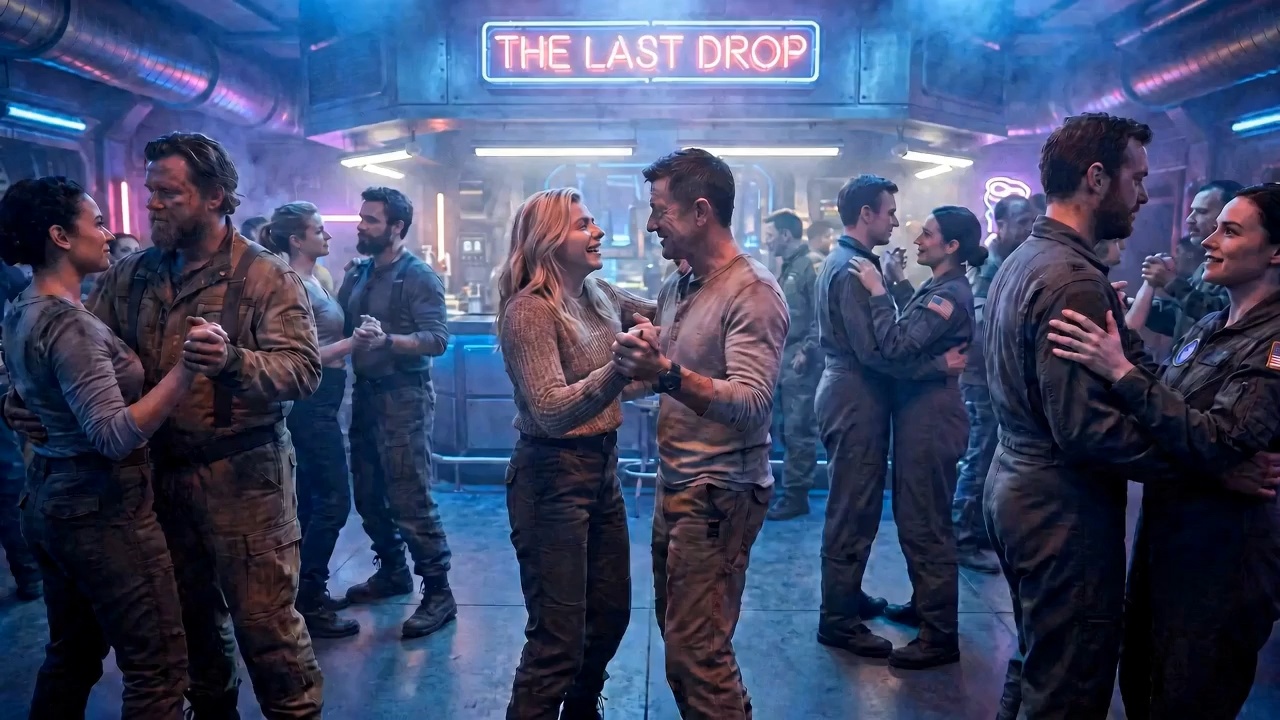
    She spotted the glowing sign of The Last Drop hanging over a bulkhead door. Pushing inside, Helen was immediately hit by a wall of sound and heat. The space-bar was loud and chaotic, packed wall-to-wall with long-haul crews blowing off steam. A rhythmic bass thumped from the sound system.

    Helen scanned the dimly lit room. Past the crowded bar, tucked away in a booth in the back, sat John.

    When he looked up and caught her eye, she watched the distant stare of a captain carrying the fate of a corporate freighter vanish completely, replaced by a smile and the man she had fallen in love with.

    Helen slid into the booth across from him.

    “You look like you fought a liquid nitrogen geyser and lost,” John said.

    “You have no idea. I’m pretty sure my core temperature is still hovering somewhere around freezing.”

    John leaned across the sticky table and took her hands in his. “I’m sorry. I shouldn’t have left you out there to handle the heavy lifting alone. I was held up in customs for three hours arguing over clearance codes.”

    “It’s fine.” Helen looked into his eyes and knew he meant it.

    “No, it’s not.” John let go of one of her hands to slide a rocks glass across the table. “Which is why I bought us this. Real whiskey. Not the Omni-Corp synthesized crap. It cost a week’s hazard pay, but we earned it.”

    Helen picked up the glass. “A week’s pay? John, we need that for our savings fund.”

    “The fund can wait one week.” John raised his own glass. “Before we drink, we make a pact. For the next two hours, there is no talking about Omni-Corp. No talking about coolant pressures or thermal relays. And we absolutely do not say the word Persephone.”

    “Agreed.” She clinked her glass against his and took a sip. The whiskey burned down her throat. “I think I’m warming up already.”

    For the next hour, they didn’t talk about the ship. They talked about the dream.

    “I was looking at the shipyard listings before we lost Earth comms.” Helen leaned in close over the table so he could hear her over the music. “There’s a decommissioned Class-3 salvage rig sitting in the Mars orbital dock. Twin fusion engines. Needs a total overhaul, but the bones are good.”

    John smiled. “Does it have a name?”

    “Not a good one. We’d have to repaint the hull anyway.” She grinned. “I was thinking cobalt blue. Not a single Omni-Corp logo anywhere.”

    “Cobalt blue,” John said, nodding in approval. “I like it. But I get the bigger captain’s chair.”

    “You’re out of your mind.” Helen laughed. “I’m the one who’s going to rebuild those twin fusion engines from scratch. I get the big chair. You can have a stool.”

    “A stool? I’m the pilot! I need lumbar support.”

    It was a shared vision, a finish line that made the fourteen-month haul entirely worth it.

    As she finished her drink, the music in the bar shifted. The beat morphed into a fast-paced track.

    John set his glass down with a thud and slid out of the booth. He stood up and extended a hand toward her.

    “No.” Helen shook her head. “Absolutely not. I am sore and probably had too much to drink.”

    “I promised you a demonstration on the bridge. I am a man of my word, Helen Mitchell. Get up.”

    Helen laughed as she let him pull her out of the booth. He led her into the packed space serving as a dance floor near the center of the bar.

    John spun her around once, then let go of her hand to proudly debut his moves. It was, exactly as he had described, the “Slip-Drive Shuffle.” To Helen, it looked like an utterly ridiculous dance that involved erratic stomping of his boots, mimicking the gear shifts of a freighter breaking the light barrier.

    He threw his shoulders into it, looking so goofy that Helen couldn’t contain herself. She burst into uncontrollable laughter. She tried to match his rhythm, stepping side-to-side, playfully dodging the other rowdy patrons.

    John turned around, stomped his foot to the heavy bass drop, and accidentally brought his boot down right on top of her toes.

    “Ow!” Helen said through her laughter.

    “I warned you! I said it was slightly dangerous!”

    Helen laughed until her sides ached. The exhaustion and claustrophobia of the ship vanished.

    As the fast-paced song transitioned into a slower rhythm, the chaotic energy on the dance floor mellowed.

    John stepped forward and pulled her in close, his hands wrapping around her waist. Helen stepped into his embrace, resting her hands on his chest.

    The neon lights washed over them in slow waves of violet and blue.

    “I meant what I said earlier,” John said, looking down at her. “I hate treating you like crew. I hate seeing you exhausted. You’re the only thing that keeps me sane out in the dark, Helen. You know that, right?”

    “I know,” she whispered.

    John’s lips met hers. It was a passionate kiss. Helen closed her eyes, losing herself in the warmth of her husband. The loud music, the rowdy miners, and the frozen moon outside all melted away into nothing.

    “I really hate to interrupt.”

    Helen’s eyes snapped open. She pulled back from John, the warm spell instantly broken.

    Standing next to them on the dance floor was Ingrid. She wore a tailored civilian jacket that made her look like she belonged in a high-end Earth club rather than a frontier dive bar.

    John blinked, looking slightly dazed, then let out a welcoming, albeit surprised, laugh. “Ingy. What are you doing down in Sector Four?”

    “Looking for you two.” Ingrid tapped the datapad in her hand. “My command channel started blowing up a few minutes ago. The Persephone’s internal sensors just threw a critical error.”

    “What happened?” Helen felt the real world come rushing back in.

    “Massive localized power surge on the secondary grid. The automated failsafe is threatening to dump the power to Cargo Bay Four to protect the slip-drive. If we lose power to the terraforming kits, Omni-Corp voids our contract.”

    Helen let out a heavy breath.

    “I’ll come with you,” John said. “We can run a system bypass from the bridge.”

    “A bridge bypass won’t stop a hardwired failsafe,” Helen said. “I need to get down into the lower logic hub, physically pull the primary breaker, and manually bridge the relay. Only my Chief Engineer biometrics can unlock that junction.”

    Ingrid held up a glass she had brought from the bar. “Mind if I sit with him while you go play with the wires?”

    “Not at all.” John smiled at Helen and stepped back toward their booth.

    Helen forced a smile. “I’ll be quick.”

    “Don’t fry yourself, Mitchell,” Ingrid said, sliding into the very seat Helen had just vacated.

    Helen turned and headed for the exit, the suffocating dread of the ship settling back over her shoulders.

    A looping video of Helen and John dancing at The Last Drop, a neon-lit dive bar on the edge of the solar system.

  • 08 Structural Integrity – Chapter 8

    08 Structural Integrity – Chapter 8

    Draft 2

    Chapter 8

    Month 1, Day 30: Charon Outpost Docks, 14:00 Outpost Time

    Helen stood in the hexagonal staging room of the Persephone’s primary airlock, locking the brass collar of her Engineering EVA suit into place.

    Magnus had offered to stay behind and spot her. According to the Omni-Corp safety manuals, babysitting active cryo-umbilicals was strictly a two-person job. But the freighter was understaffed, and Helen had waved the deckhand off, telling him to go enjoy his shore leave while she handled the maintenance.

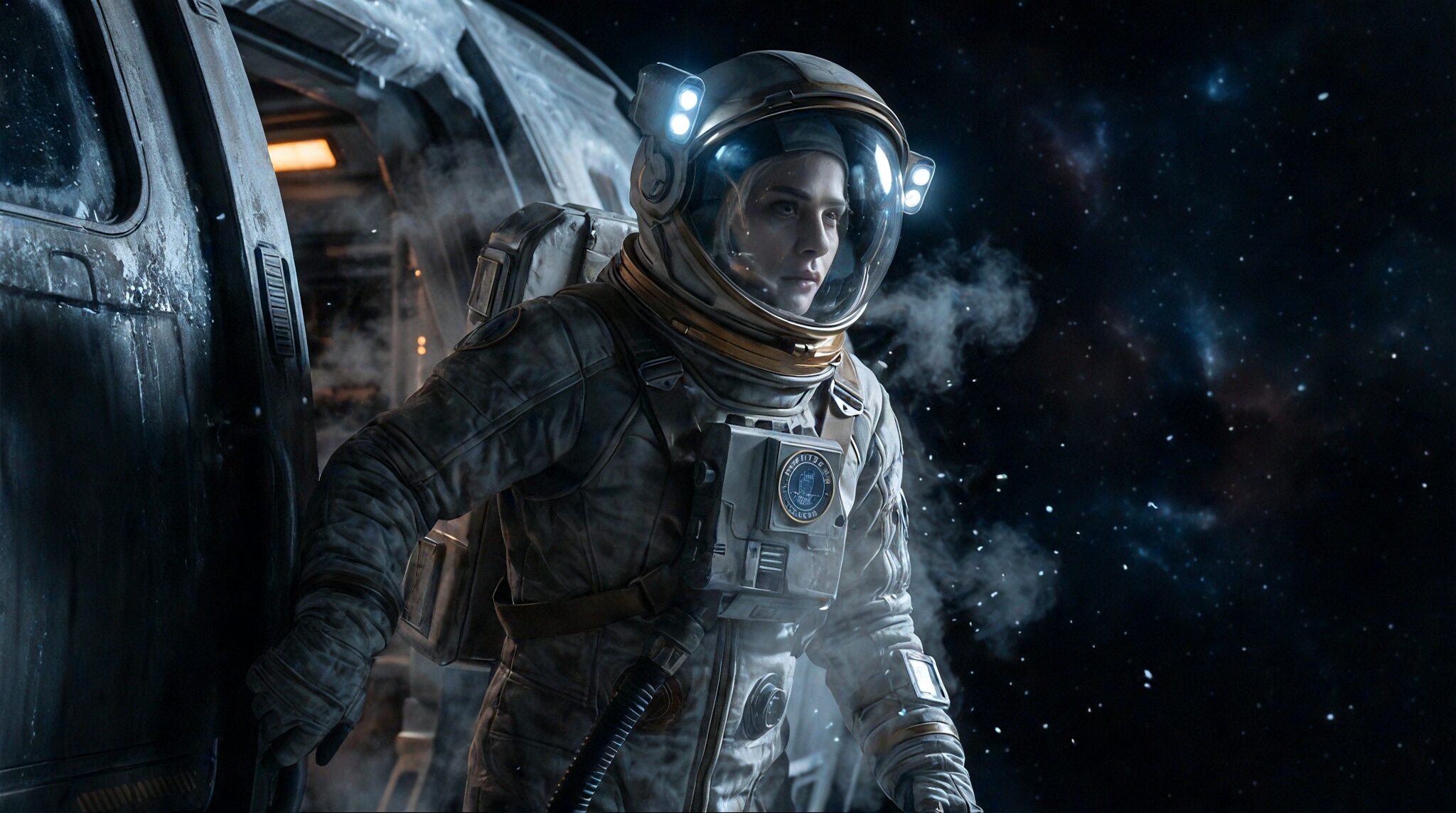
    The suit was an Omni-Corp hand-me-down patched with sealant tape at the elbows and knees. As she pulled the helmet over her head, it sealed, instantly cutting off the thrum of the ship. Now, the only things she could hear were her own breathing and the crackle of the comms in her ear.

    Her Heads-Up Display (HUD) projected a blue overlay of oxygen levels, suit pressure, and external temperatures across her visor.

    “Comms check, Seven. Do you read me?”

    “Loud and clear, Madam.” Seven’s voice came through her earpiece from his docked position at the primary engineering terminal. “You will be pleased to know that I am safe within the ship’s climate-controlled interior. Internal ambient temperature is a pleasant seventy degrees Fahrenheit. My servos are well-lubricated and entirely frost-free.”

    Helen punched the airlock cycle button with her insulated glove. “Good for you. Keep an eye on the intake telemetry. This fuel is cheap, and I need you to tell me the second the lines start choking.”

    “I am already deeply offended by the data pouring into the mainframe,” Seven said. “I can confirm the liquid hydrogen they are pumping is only eighty percent pure. The remaining twenty percent is a hazardous mix of unrefined ice-slush and metallic particulates.”

    “That’s why I’m going out there.”

    The inner doors sealed behind her. The airlock purged its oxygen, dropping the room into a vacuum, and then the outer doors slid apart.

    Helen stepped out onto the ship’s exterior gantry. Her magnetic boots engaged with a clank, clank, anchoring her to the grated metal to compensate for the moon’s low gravity.

    Charon Outpost was a sprawling mining community built directly into the rock and ice of Pluto’s orbital twin. Seeing it in person was a stark reminder of how far from Earth they really were.

    Skeletal drilling rigs pierced the moon’s crust, mining ancient ice to be refined into hydrogen fuel. They were illuminated by clusters of floodlights and neon advertisements for cheap space-bars and black-market betting parlors.

    Plumes of super-heated vapor vented into the vacuum from underground refineries, creating a fog that clung to the docking rings. Other freighters were clamped into nearby docks.

    Helen lumbered along the hull toward the Persephone’s primary fuel port. Two frost-covered umbilicals were clamped into the ship’s ventral hull, pumping super-cooled cryogenic fuel into the tanks.

    The hoses were thick as tree trunks. Helen could feel the vibration of the fuel rushing through them.

    “Filter one is approaching critical mass, Madam,” Seven said. “Particulate blockage at seventy percent. Pressure is climbing.”

    “I see it.” Helen reached down to her EVA harness, unclipped her thermal lance, and let the magnetic safety tether spool out.

    She anchored her boots on both sides of the umbilical’s filter housing. The manual purge lever on the side of the filter was encased in three inches of solid ice.

    Helen thumbed the ignition on the lance. A bright blue, six-inch blade of concentrated plasma erupted from the nozzle.

    She held the heat against the frozen mechanism, causing the ice to boil instantly into a vapor. Within seconds, the lever was exposed. She killed the torch, let it drop to hang from its tether, and grabbed the lever with both hands.

    “Madam, filter one is at eighty-five percent. A rupture will occur in exactly one minute and twelve seconds. You will be flash-frozen in approximately 1.4 seconds. Please avoid this outcome.”

    “I’m trying!”

    She grunted, leaning her entire body weight backward to pull the heavy lever. It groaned and then slammed open.

    A high-pressure geyser of gray sludge blasted out of the side-vent. The force of the release caused the umbilical to buck like a serpent. Helen tried to lock her elbows to hold the lever steady, but she wasn’t strong enough. The bucking hose slammed into her shoulder, knocking her arm back.

    The vent jerked upward, and the geyser of super-cooled slush ricocheted off the hull and sprayed across her chest and helmet.

    Her suit’s thermal alarms blared, flashing red across her HUD. A layer of frost bloomed across her visor, blinding her.

    “Thermal integrity compromised! Core temperature dropping!” Seven yelled over the comms.

    Blinded and freezing, Helen refused to let go. She grabbed the thrashing hose with her left arm while her right hand fumbled for the lever. Her fingers were going numb. She found the steel grip, threw her body weight over it, and wrenched it back to the closed position.

    The hissing stopped. The hose went slack. The pressure normalized. She had closed it.

    Helen collapsed backward onto the hull. Her shoulder throbbed where the hose had hit her. She raised a glove and scraped the ice off her visor until she could see again.

    “Purge complete, Madam. Intake flow returning to acceptable parameters. However, your suit’s thermal gel is severely depleted. I highly recommend not being sprayed again.”

    “No kidding.”

    She pushed herself up. From her vantage point, she had a perfect view of the flex-glass boarding tube extending down to the Outpost’s cargo docks.

    The crew was leaving.

    She watched Janet walk down the slanted corridor first with a satchel in hand.

    A moment later, Magnus strutted down the tube. He was a man in need of a heavy drink, a loud room, and a bar fight.

    Then came Claude. The science officer was pushing an anti-gravity cart. It was currently empty. It was an odd sight; Omni-Corp researchers rarely did their own heavy lifting, and she couldn’t imagine what a corporate scientist needed with an industrial loader-cart in the slums of a refueling depot.

    Finally, Ingrid appeared. The navigator strolled down the tube, looking unbothered and ready for a relaxing two days of shore leave.

    And here she was, half-frozen and tending toxic sludge. She was the help. The blue-collar mechanic keeping the ship alive. Meanwhile, Ingrid got to stroll off the ship like a tourist.

    And worse, John was still trapped inside, buried under a mountain of customs paperwork, dealing with dockmasters and corporate red tape.

    Helen checked the glowing digital clock on her helmet’s HUD.

    15:15

    Her date with John at The Last Drop was at nineteen-hundred hours. That gave her less than four hours to finish purging the sludge, detach the umbilicals, thaw out, and get to Sector 4.

    She stared down at the neon lights of the outpost slums below. She desperately needed this date. She needed to sit across from her husband, look him in the eye over a cheap drink, and remember why they were putting themselves through this fourteen-month round trip. She needed to hear him laugh, the way he had laughed with Ingrid on the bridge. She needed to know they were still a team.

    “Madam, filter two is currently registering a seventy-four percent blockage. The pressure is rising rapidly. Given your recent physical performance, I calculate a forty percent chance you will slip again.”

    “I’m on it, Seven.”

    A looping video of Helen outside the Persephone, using her thermal lance to melt the ice off a frozen purge lever on the hull.

  • 07 Structural Integrity – Chapter 7

    07 Structural Integrity – Chapter 7

    Draft 2

    Month 1: Day 30

    “Approaching Charon Outpost. Pitching down three degrees,” Ingrid said from the pilot’s seat.

    Helen looked up from the engineering console. Through the forward viewport, the edge of the solar system loomed. Charon, Pluto’s largest moon, grew from a distant gray speck into a scarred sphere of rock and ice. It was a bleak world floating in the dark, the last bastion of civilization.

    Built directly into the moon’s frozen crust was the Outpost—a sprawling, gritty, industrial base. Huge, automated drilling rigs were illuminated by clusters of white floodlights and neon signs. Plumes of vented plasma and super-heated vapor rose above the surface. It was the truck stop at the end of the world.

    The Persephone hit the moon’s gravity without incident.

    Helen felt the deck plates vibrate.

    “Firing retro-thrusters,” John said. “Hold her steady, Ingy. The gravity well here is heavier than it looks. Compensate the port thruster by four percent.”

    “Already on it.” Ingrid stabilized the gyros before John had finished his sentence. “I know what you need, John.”

    “You always do. Aligning with Docking Ring 7-C.”

    Helen sat still at her station as the ship shuddered. She didn’t like watching the two of them pilot the ship together. She needed to stay focused on the ship’s internal pressure, not her husband’s ex-girlfriend.

    Unit Seven clung to the velcro patch near Helen’s collarbone. His blue optic processed the telemetry data pouring in from the station’s automated systems.

    “Madam.” Seven’s audio piped into her earpiece. “My preliminary scans of Charon Outpost’s cryogenic fuel reserves are deeply concerning. The liquid hydrogen they are offering is not entirely pure. I recommend praying to a higher power, if your human programming allows.”

    Helen tapped a sequence into her board to prep the intake manifolds, whispering a quiet prayer. “I’m going to have to purge the filters three times just to keep the slip-drive from choking on it.”

    “Fifty meters out,” Ingrid said. “Feathering the rig.”

    “Copy that.” John watched the alignment crosshairs. “Brace for impact.”

    The magnetic clamps of the Outpost’s docking ring shot forward. They locked onto the Persephone’s hull with a bone-rattling clank. The physical G-force jolted Helen back into her seat. The bulkhead shrieked, followed by the terrifying hiss of the station’s umbilicals attaching to the ship’s external fuel ports.

    They were anchored.

    John let out a heavy breath as he flipped a row of overhead switches, powering down the main thrusters. He turned his captain’s chair around to face the crew.

    “Alright, listen up,” John said. “We’re officially docked at Charon Outpost. Omni-Corp has given us a strict forty-eight-hour refueling window. If we miss it, we lose our trajectory for the Dead Zone, and we add three weeks to our transit time. I am not taking that pay cut, and neither are you.”

    Magnus unbuckled his restraint harness. He stretched, popping his neck. “So, what you’re saying is, we have exactly forty-eight hours to get off this rust bucket and find a real drink.”

    “Shore leave is granted,” John said. “But keep your comms on. Once we leave this rock, we drop into the Dead Zone. That means fourteen months of slip-space with zero communications back to Earth. If you need anything from civilization, get it now.”

    “I’ll be heading straight to the medical sector,” Janet said. “I need to restock our dermal patches and synthesize a few baseline antibiotics before we jump.”

    Claude stood up from the science station, brushing a speck of lint from his lab coat. “And I have several encrypted Omni-Corp data packets to deliver, along with some sensitive research errands. I assume I am free to disembark, Captain?”

    Magnus scoffed. “Researching what, Professor? The bottom of a bottle in the slums?”

    Claude didn’t even look at the mechanic. “Some of us are bound by corporate non-disclosure agreements, Mr. Cantarini. Try not to start any fights that delay our departure. My bio-samples are highly sensitive to schedule disruptions.”

    Magnus rolled his eyes and headed for the door. “Keep your secrets, Suit.”

    Ingrid powered down the primary navigation board and unbuckled her harness, grabbing her uniform jacket from the back of her chair. “Ship is locked and secure, John. I’m going to go find a decent meal that didn’t come out of an Omni-Corp synthesizer.”

    “Enjoy it, Ingy.” John waved a hand and dismissed them all. “Just be back before the umbilical clamps detach.”

    As the crew filed out, Helen stayed at her station, finishing her diagnostic sequence on the fuel lines.

    When the blast door shut, John slumped back into his chair. Helen walked over to him. “Everything okay?”

    “Just Omni-Corp red tape.” John scrolled through an endless list of glowing red text. “Charon Control is already breathing down my neck. Customs wants to verify the bio-stasis manifest, the dockmaster needs my deceleration logs, and I have to manually input the corporate authorization codes just so they’ll turn the fuel pumps on. I’m going to be buried in meetings and paperwork for the next several hours.”

    Helen looked toward the viewport, where frost-covered hoses were already locking into the ship’s belly, venting excess gas. “And I have to suit up and babysit those cryo-hoses. Seven says the fuel out there is sludge. If I don’t manually monitor the intake valves, the freezing fuel will crack our primary coolant pipes, or we’ll fill our tanks with micro-meteorite dust.”

    John raised the armrest of his captain’s chair and gently pulled her down onto his lap. She wrapped her arms around his neck, and they shared a kiss. The rest of the crew was off to stretch their legs, drink, and forget the Persephone existed, leaving just the two of them behind to keep the freighter alive.

    John pulled her closer. “Get through the purges. Once the suits sign off on my manifest, I’m done being Captain Mitchell and I can be your husband for a few hours. I’ll buy you a good meal, if one is to be had down there, and maybe we can do a little dancing.”

    Helen leaned back just enough to give him a teasing smile. “Dancing? That’s not exactly your strong suit, Captain. But I can’t wait.”

    John laughed. “Are you making fun of my dance moves? Just meet me at The Last Drop in Sector 4. Nineteen-hundred hours. I’ll show you the ‘Slip-Drive Shuffle.’ It’s highly unpredictable, slightly dangerous, and mostly just me stepping on your boots.”

    “Nineteen-hundred. Don’t be late.” Helen gave him one last kiss and slid off his lap.

    “I wouldn’t dare.”

    Helen headed for the door. Suddenly, babysitting cryo-hoses didn’t seem so bad. She had a few hours of grueling work in the cold ahead of her, but tonight, she and John were going on an actual date.

    A looping video of the Persephone approaching Charon Outpost for a final refuel before 14 months in the Dead Zone.

  • 06 Structural Integrity – Chapter 6

    06 Structural Integrity – Chapter 6

    Draft 2

    Week 3: Transit to Charon Outpost

    The lower logic hub of the Persephone was a cramped, cold cavern of blinking server racks and tangled fiber-optic cables.

    Helen sat cross-legged on the grated metal floor with a magnifying visor pulled down over her eyes. She held a pair of micro-probes, carefully recalibrating the ship’s primary optical cables. It was highly technical and tedious work, but she liked it. Down here, things made sense. If a wire was frayed, you spliced it. If a circuit was broken, you bridged it.

    Her datapad chimed on the floor beside her knee.

    Helen paused and lifted the visor. The screen displayed a tiny “ghost draw” pulling from the ship’s secondary power grid. It was a minor routing error, barely a fraction of an amp, but she wouldn’t let it go. Left unchecked, a ghost draw could eventually compound into a blown relay.

    She traced the schematic on the pad. The wiring for that specific grid was located behind a welded, three-inch-thick titanium bulkhead near the aft cargo holds.

    Helen sighed. Instead of spending four hours hauling a plasma torch to cut the panel open, she tapped the side of her helmet.

    “Seven, you’re up.”

    Unit Seven detached from his charging port on her utility belt and hovered into the air. “Awaiting instructions, Madam.”

    “I have a ghost draw on the secondary grid. I need you to bypass the titanium bulkhead by using the climate-control vents to get into the cable conduits and run a diagnostic.”

    “Acknowledged.” Seven spun around. Because of his size, he easily slipped through the narrow slats of the nearest ventilation grate. His articulated metal legs clicked softly against the aluminum ductwork as he began his ascent through the ship’s circulatory system.

    Helen had felt isolated over the last three weeks. She missed her husband. She missed the sun.

    Feeling the sting of that loneliness, Helen tapped the console on her wrist. She intentionally left Seven’s audio feed open, piping it directly into her bone-conduction earpiece. It was technically using her AI as a flying wiretap, but she just wanted to hear the voices of the crew as he traveled.

    A few minutes later, the audio feed crackled to life as Seven crawled over the grate above the mess hall.

    “I swear, this Omni-Corp degreaser is fifty percent battery acid. It eats right through the utility gloves and melts my skin, but God forbid it actually cleans the grease off a hydrospanner.”

    “Let me see.” Janet set down her sandwich. “It’s just a minor chemical burn. I have a dermal patch in the med-bay. It will synthesize new tissue in a few hours.”

    Helen smiled as she worked, listening to the conversation.

    “How’s Helen holding up?” Janet asked.

    “The Chief is buried in the logic boards down there, and the Captain’s a ghost. I’m telling you, doc, this ship is running on stress and duct tape.”

    Seven whispered over the feed, “Madam, Mr. Cantarini’s blood pressure is elevated by annoyance. Medical Officer Wilson’s heart rate remains a steady sixty beats per minute.”

    “Let them be, Seven. Keep moving toward the aft conduits.”

    The audio shifted to the muffled hum of the ship’s slip-drive as Seven navigated the cabling network above the Science Lab.

    Through the feed, Helen heard the click of micro-tools. Claude was humming a classical tune—Bach, maybe—to himself.

    “Madam,” Seven dimmed to stealth mode as he scanned the room below, “I have located the source of your unauthorized power draw. Science Officer Kinskey has spliced industrial-grade microcontrollers onto the secondary relays leading to Cargo Bay 4.”

    “So that’s where my power went. He’s piggybacking off the engineering grid without filing a requisition.” Helen knew Claude had an incoming shipment scheduled for Docking Bay 7-C when they reached Charon Outpost next week. “He must be modifying the Persephone’s grid to handle whatever sensitive Omni-Corp bio-samples he’s picking up.”

    “It is an unusual and highly excessive modification for the transportation of soil samples,” Seven said.

    “I think it’s fine, Seven. He’s just being a paranoid scientist trying to keep his precious dirt warm. Keep moving to the forward arrays.”

    Seven’s legs clicked as he moved further down the ship.

    A few moments later, he reached the forward climate vents near the bridge. The ambient noise over the feed dropped to a hush. Helen stopped working to listen.

    “Pitching down two degrees,” Ingrid said.

    “Copy that. Adjusting gyros to compensate,” John said.

    “You know,” Ingrid said, “if old man Higgins from Luna Hub Dispatch could see us feathering a rig this heavy, he’d probably swallow his own chewing tobacco.”

    John laughed.

    Helen felt insecurity twist in her chest. The camaraderie between the ex-lovers felt like a wall she couldn’t climb over.

    “Madam, the Captain’s vocal stress patterns decrease by eighteen percent in XO Mills’ presence. If you wish, I can release a localized spray of Freon from the climate vents into the cockpit. It will give the Navigator a severe head cold, effectively removing her from the bridge.”

    Helen wanted to say, do it. Instead, she said, “Stand down, Seven. Return to Engineering.”

    Twenty minutes later, Helen was packing her tools when the blast doors opened and John walked into Engineering.

    The laughing man she had just heard on the comms was completely gone. He was wearing his heavy “Captain” persona.

    “Status report on the logic grid?” he asked, treating her like a subordinate.

    “Optical cables are recalibrated and the grid is stable.” Helen wiped her hands. “John . . . we’re only a week away from Charon Outpost. We have a forty-eight-hour refueling window. Do you think we can spend some time together? Maybe get a drink at a real bar?”

    John sighed, reaching up to pinch the bridge of his nose. He looked at her with regret. “I’d love that. Really, I would. But I’ve got to oversee the refueling umbilicals, handle the Omni-Corp customs manifest, and log the deceleration vectors.”

    Helen looked down at her boots. “Right. I understand.”

    John stepped closer and embraced her. “Don’t worry, I’ll carve out some time for us, I promise. I just have a lot of plates spinning right now.”

    “I know.”

    “I have to get back to the bridge.” John kissed her lips. “I’ll see you later in quarters.”

    Helen watched him walk out. The doors closed, leaving her in the blinking lights of the server room. Unit Seven dropped out of a ceiling vent and hovered beside her head.

    She realized just how massive the emotional distance between them had become. As the Persephone hurtled through space, Helen pinned all her desperate hopes on the neon lights of Charon Outpost, praying that a few hours off the ship with John would be enough to fix their marriage.

    “Madam, I detect a severe drop in your serotonin levels,” Seven vibrated softly. “But please consider the data. The Captain just kissed you. He initiated physical contact, whereas his interaction with XO Mills was purely verbal and task-oriented. Statistically speaking, you remain his primary variable.”

    “You’re right, Seven. I’m sure I’m worrying over nothing.”

    Seven’s blue light pulsed. “Madam, I have analyzed the Captain’s schedule. If I were to ‘accidentally’ delete the Omni-Corp customs manifest from the mainframe, it would legally mandate a twenty-four-hour processing hold at Charon Outpost. This would guarantee the Captain is entirely free to take you to a bar. Shall I execute the deletion?”

    Helen laughed, the tension in her chest breaking just a little. “As much as I love that idea, we don’t need our pay docked. Leave the manifest alone, Seven. But I do appreciate the loyalty.”

    A looping video of Unit Seven looking down on John and Ingrid from a ceiling vent on the bridge.

  • 05 Structural Integrity – Chapter 5

    05 Structural Integrity – Chapter 5

    Draft 2

    Day 11: Science Lab

    The Science Lab was the only civilized room on the entire ship. While the rest of the Persephone was a claustrophobic maze of exposed piping, flickering lumen-strips, and the perpetual hum of the slip-space drive, Claude Kinskey’s lab was pristine. The walls were a sterile white, and the air scrubbers were calibrated to remove even the faintest scent of Deuterium residue.

    Claude used a pair of micro-tweezers to strip the casing off a heavy-duty copper wire, splicing it directly into a high-capacity power relay. He was in the process of bypassing the relay’s standard fuse with a custom microcontroller when a soft, mechanical whir broke his concentration.

    Click-whir.

    Claude sighed. “Back away from me.”

    Unit Seven hovered barely two feet from Claude. The drone’s optical lenses contracted and expanded, zooming in on Claude’s hands.

    “Pardon my curiosity, Science Officer Kinskey, but my database indicates that specific relay is rated for high-yield industrial cryonics, not subterranean soil samples. Are you anticipating a massive thermal load in the near future?”

    Claude set down his tools. He didn’t hate the AI, but he found the hovering appliance incredibly tiresome.

    “What I am anticipating is that if you do not exit my laboratory, I will cite Omni-Corp Security Protocol 41-A and have your optical sensors permanently recalibrated to stare at a bulkhead. Do you understand me?”

    Seven’s optical aperture shrank, mimicking a blink. “Understood, Science Officer Kinskey. Though I must note, Omni-Corp’s protocols are fascinatingly aggressive regarding agricultural dirt. I shall leave you to your highly classified gardening.”

    With a soft hum of its antigravity thrusters, Seven pivoted and floated toward the exit.

    Before the door could slide shut, Magnus strode into the lab. Claude quickly swept the modified power relay into a lead-lined drawer and pushed it shut. The magnetic lock engaged with a click.

    Magnus carried a heavy crate of chemical solvent. He set the crate onto one of Claude’s metal counters.

    Instantly, the lab smelled of sweat. Claude stepped back.

    “Weekly supplies.” Magnus’ eyes drifted from the solvent crate to the locked drawer Claude was standing in front of.

    “Thank you. You may go.”

    Magnus chuckled. “You don’t look like a dirt-scratcher, Professor. Matter of fact, you got the cleanest hands of anyone I’ve ever seen on a commercial hauler.”

    “I am a contracted Omni-Corp researcher. My work requires a sterile environment, not heavy lifting.”

    “Right. I’ve been flying with corporate types for twenty years. Every time one of you Suits ends up on a rust-bucket like this, it means the Company is hiding something. And I don’t trust Suits who lock their drawers the second someone walks by.”

    Claude offered a condescending smile. “Unless you have a sudden, burning interest in the isotopic decay rates of Tartaran terraloam and the proprietary molecular binding agents Omni-Corp utilizes in its bio-domes, I suggest you return to the cargo bays. Or would you like me to explain the covalent bonds to you?”

    Magnus stared at him. Then, he grunted, clearly deciding the conversation was a waste of time.

    “Keep your secrets, Professor.” Magnus turned toward the door. “But don’t get in our way.”

    The door hissed shut behind him.

    Claude shook his head in mild amusement. He immediately grabbed a sanitized cloth and wiped down the counter where Magnus had placed the crate.

    Once the lab was clean again, Claude walked over to his primary console. Just to be certain he wouldn’t be interrupted again, he tapped a sequence of keys to bring up the external corridor cameras.

    On screen one, Magnus was stomping back toward the lower decks, talking to himself. On screen two, Helen was squeezing into a ventilation shaft with her hydrospanner.

    Claude minimized the feeds. Good. The hired help was busy keeping the ship running.

    He opened a hidden, encrypted terminal. Bypassing the ship’s standard comms array, he typed in a thirty-two-character alphanumeric passcode. The screen transitioned from standard Omni-Corp blue to an untraceable black. A single text file waited in his inbox, sent via a heavily bounced dark-web relay.

    TRANSACTION CONFIRMED. CHARON OUTPOST. DAY 30. DOCKING BAY 7-C. FUNDS SECURED. HAVE THE CONTAINMENT PROTOCOLS READY.

    Claude smiled. The asset he was purchasing at Charon Outpost would secure his fortune and his permanent exit from the drudgery of corporate assignments. He had already calculated the exact power draw required. Once he wired his custom modifications into the ship’s primary grid, his “cargo” would remain perfectly stabilized and frozen for the journey to Tartarus.

    Claude leaned back in his chair. It was a flawless plan. All he needed was for Helen, John, and the rest of the crew to do their jobs. As long as they kept their heads down, followed their routines, and simply chauffeured the Persephone to its destination, they would all be absolutely fine.

    Looping video of Science Officer Kinskey working in the science lab with Seven pestering him.

  • 04 Structural Integrity – Chapter 4

    04 Structural Integrity – Chapter 4

    Draft 2

    Day 6, Transit to Charon Outpost, Med-Bay

    The Med-Bay was a sterile white sanctuary compared to the rest of the gritty bio-hauler.

    Helen lay on the examination table, while Unit Seven hovered around, scanning the medical equipment with suspicious intensity.

    Janet, dressed in blue scrubs, stood at the console, tapping commands into her datapad as the automated bio-scanner ran its routine. The scanner, a crescent-shaped device attached to a mechanical arm, swept over Helen’s body. It paused over her arm and quickly extracted a tiny vial of blood before retracting into the wall. Janet took the vial and slotted it into the refrigerated centrifuge.

    “Madam, your resting heart rate suggests you are preparing for imminent physical combat,” Seven said. “Shall I engage defense protocols?”

    Janet chuckled. “There’s no combat in the Med-Bay, Seven. Power down for a minute so the humans can talk, alright?”

    “I will enter standby mode. But I advise against letting her poke you with any sharp instruments, Madam. Statistically, medical errors account for—”

    “Thank you, Seven,” Helen said. “You can stand by.”

    The drone’s optic dimmed, and his rotors hummed at a low idle as he settled onto the medical counter next to the bio-scanner’s docking port.

    “I don’t know how you put up with him.” Janet stepped next to the table as the scanner finished its exam. “He’s like a flying, metallic mother-in-law.”

    “He keeps me sharp. Besides, I kinda like him. He keeps me company.” Helen sat up. “So what’s the verdict?”

    Janet looked over the datapad. “Good. Your blood pressure and heart rate are a little high, but that’s probably from white coat syndrome. Lots of people have that reaction. Otherwise, everything is fine. I’m logging this as your official baseline. Physically, you are the healthiest engineer I’ve seen on this rust bucket.” Janet set the datapad down and leaned against the counter. “But how are you doing mentally? That rushed launch at Luna Hub was a nightmare.”

    Helen shifted uncomfortably on the exam table. “I’m fine. Just tired. The secondary coolant valves have been acting up since we broke orbit, and the pressure buildup in Vent Network Three is going to require me to bypass the thermal relays before we hit Charon Outpost.”

    Janet tilted her head. “I didn’t ask about the ship’s coolant lines. I asked about you.”

    Helen shrugged. “It’s just a lot of pressure.”

    “It is,” Janet said. “And John? He’s been carrying the weight of the ship on his shoulders, trying to keep the Omni-Corp suits happy. But how are you doing with him?”

    Thoughts of John and Ingrid filled her mind, but she didn’t want to talk about it. She didn’t want to sound jealous or paranoid. “John is just doing his job. He’s stressed, but we’re fine. Once we hit Charon and top off the tanks, things will settle down.”

    “Just remember, Helen, you can’t fix a marriage with a hydrospanner. You have to actually talk to him. My door is always open if you need an ear.”

    “Thanks, really.” Helen hopped off the table. She picked up Seven, slipping his dormant body into the breast pocket of her jumpsuit. “But we’re okay.”

    ***

    Later that evening, Captain’s Quarters

    Helen and John’s shared quarters were cramped, roughly the size of a large closet with a desk and a bathroom, but it was the one place on the ship that felt like theirs.

    Helen was sitting cross-legged on the bed, looking over the blueprints for the ship’s primary grid. Taped to the bulkhead right beside her pillow was a printed photograph of a salvage ship, a beautiful vessel that didn’t have Omni-Corp’s logo stamped anywhere on its hull.

    The door slid open, and John stepped inside.

    He looked exhausted as he unfastened the collar of his command uniform.

    Unit Seven, currently resting on the desk, fixed his blue eye on John. “Captain Mitchell, your bio-rhythms indicate a massive spike in stress hormones, accompanied by acute fatigue. Shall I contact Medical Officer Wilson?”

    “No need for that, Seven, but I appreciate you looking out for him,” Helen said. “I’m going to take care of him tonight. Could you engage your visual and audio privacy filters, please?”

    “Privacy mode engaged.” Seven rotated to face the bulkhead. “Visual and audio sensors are now locked. Sleep well, Captain.”

    “Thanks, Seven,” John said as he sat down on the edge of the bed. “God, I’m sorry, Helen. I know I was riding you hard today, but I don’t want to hit the Dead Zone behind schedule. They’ll dock our pay by thirty percent.”

    Helen put the blueprints aside and moved closer. “You don’t need to apologize. I know how much pressure you’re under.”

    He reached up and gently stroked her cheek. “I just hate treating you like one of the crew when we’re out there. I hate seeing you exhausted.”

    “I’m an engineer. Exhausted is in my job description.” Helen smiled and nodded toward the photograph taped to the wall. “Besides, we both know why we’re doing this. Fourteen months. We deliver the terraforming kits, collect the hazard payout, and we buy the salvage ship. We are done with Omni-Corp forever.”

    John looked at the picture. “I’ve got it handled, I promise. Just let me worry about the corporate suits, okay? I want to get us out of this grind just as badly as you do.”

    Helen leaned in and kissed him. The kiss deepened.

    “It’s just you and me against this rust bucket,” John said against her lips.

    “Just you and me,” she whispered back.

    He pulled her down onto the mattress, and the overwhelming vastness of the ship faded away into the dark.

    ***

    03:00 Ship Time, Corridors & The Bridge

    Helen woke to the rhythmic vibration of the slip-drive. She reached her hand out across the sheets, seeking the warmth of her husband.

    The bed was cold. The digital clock on the wall read 03:00. John was gone.

    She sat up. He was probably just restless. The corporate deadlines always gave him insomnia. Figuring he was either on the bridge running diagnostics or pacing the mess hall, Helen slipped into her jumpsuit, zipped it up, and walked out into the corridor.

    She stopped by the mess hall first. It was empty. She went to the synthesizer, punched in a quick sequence, and waited as the machine dispensed two cups of coffee: one black sludge for her, and one with synthetic cream, just the way John liked it.

    Carrying the two cups, Helen made her way down the forward corridor toward Flight Command.

    As she approached, she stopped. The blast-proof cockpit door was sealed shut. The locking mechanism beside the frame glowed a solid red.

    Helen frowned. It wasn’t standard protocol to lock the bridge doors during transit unless there was a navigational hazard.

    She stepped closer and peered through the door’s window.

    Inside, the bridge was bathed in the blue glow of the navigation monitors. John was standing at the dual-console. Beside him was Ingrid.

    They weren’t doing anything scandalous. They were just looking at a telemetry readout together. But they were standing so close, their shoulders nearly brushing as they leaned over the screen. Ingrid’s hand was moving on the keyboard as John pointed to something on the display, his head tilting toward hers.

    Then, John said something Helen couldn’t hear, but it made Ingrid laugh. She hadn’t heard John pull a laugh like that out of anyone in weeks, but this was a woman he used to be in love with.

    An ugly pang of jealousy twisted like a blade in her stomach. Just a few hours ago, John had been in her arms, telling her it was just the two of them. Now, he was locked away in the dark, sharing the night shift with his ex-flame.

    Helen stared through the glass. She could have punched in her override code and walked in. She was his wife. She had every right to hand him the coffee and ask what was so funny. But her instinct was to shut down.

    She turned her back on the red light of the locked door and walked back to the mess hall. She dumped both cups of coffee down the recycler drain and headed to the lower decks of Engineering, burying herself in the one thing she knew she could control.

    A looping video of Helen and John in the Captain’s quarters.

  • 03 Structural Integrity – Chapter 3

    03 Structural Integrity – Chapter 3

    Draft 2

    Day 1, Transit to Charon Outpost

    “Engaging main thrusters.” John moved his hands over the primary flight console.

    “Gyros stabilizing,” Ingrid said.

    Helen braced herself in her seat at the engineering station. She watched her monitor as the Persephone’s faster-than-light slip-drive spooled up.

    She felt the floorboards vibrate as the thrusters fired, pushing the ship away from Luna Hub. Then a wave of G-force hit the bridge, pressing Helen back into her seat.

    “Slip-drive is at ninety percent,” Ingrid called out over the roar of the engines. “We are breaking orbit.”

    Suddenly, an alarm blared through the rumble. Helen’s console flashed red.

    “Captain, we have a pressure spike in Vent Network Three.” Helen isolated the warning. “The launch vibration probably knocked a secondary coolant valve loose. If it blows, the slip-drive is going to overheat before we even clear the moon.”

    “Handle it, Helen,” John said, focused on the viewport. “We can’t abort the launch sequence now.”

    “On it.”

    The moment the G-forces leveled out into standard acceleration, Helen unbuckled her harness. With the hydrospanner still attached to her belt, she bolted off the bridge.

    Minutes later, Helen was wedged inside a freezing, poorly lit ventilation shaft near the aft engine block. The space was cramped, and the walls vibrated as the ship continued to accelerate.

    “Madam, the structural integrity of this secondary valve is currently degrading at a rate of four percent per minute.” Unit Seven hovered inches from her ear, his blue optic strobing against the walls. “If the pressurized liquid nitrogen breaches the seal, we will be instantly flash-frozen.”

    “I’m aware, Seven. Shine some light my way.”

    Seven illuminated the vibrating valve. Helen reached out, fitting the micro-hydraulic head of her hydrospanner around the frozen bolt.

    Before she could engage the torque, the ship shuddered as the slip-drive hit its final gear. A wave of magnetic interference rippled through the shaft.

    Seven’s voice cut out and his blue optic dimmed to a dull gray.

    “Seven?”

    The little drone’s legs locked up, his rotors dying instantly. He dropped out of the air like a stone. Helen lunged, catching him in her left hand just before he plummeted down the vertical drop of the shaft.

    “Damn recycled hardware.” Helen tucked his lifeless body into her breast pocket.

    Helen gripped the hydrospanner, thumbing the activation switch. The tool applied torque that Helen’s arm alone could never produce. With a screech, the valve turned, locked, and sealed.

    The hissing of escaping coolant stopped. Her datapad blinked green.

    Helen sighed, her breath pluming in the freezing air. She pulled Seven out of her pocket and popped open his casing. Carefully, using the tip of a micro-driver she kept in her sleeve, she nudged his primary processor bridge and manually reset his micro-matrix.

    She tapped his chassis twice.

    Seven’s optic flickered, then flared a bright, steady blue. His rotors whirred back to life, lifting him out of her palm.

    “System reboot successful,” Seven vibrated. “I appear to have experienced a temporal lapse. Did we freeze to death?”

    “No, Seven. We’re fine. Let’s get out of this vent.”

    ***

    Day 4, Transit to Charon Outpost

    The ship had settled into the rhythmic hum of slip-space travel. Helen walked into the mess hall after a much-needed shower.

    “I’m just saying, I risked a corporate write-up to steal that Grade-A thermal fuse, and this synthesizer still makes the chicken taste like wet cardboard,” Magnus said.

    The cargo deckhand was sitting at the central table, poking at a gray square of food with his fork.

    Janet sat across from him, sipping hot water and lemon. The ship’s medical officer smiled at Helen as she approached. “Don’t listen to him. The synthesizer is working perfectly. Magnus just lacks a refined palate.”

    “I lack a steak.” Magnus took a miserable bite of the gray meat.

    Helen walked over to the beverage dispenser and poured herself a cup of coffee.

    At the end of the table sat Claude. The science officer was peeling an apple, likely from his own private, sterilized stash.

    Unit Seven, who had been resting on Helen’s shoulder, suddenly detached and hovered across the room. He stopped directly over Claude’s plate.

    Claude paused his knife, looking up at the drone with confusion.

    “Dr. Kinskey.” Seven’s eye scanned the fruit. “Your apple contains approximately fourteen percent more natural fructose than the standard synthetic rations provided by Omni-Corp. Statistically, this will lead to a minor spike in your glycemic index, followed by an energy crash at roughly fourteen-hundred hours.”

    “Thank you, Unit Seven. I will be sure to monitor my fatigue.”

    Seven lowered himself an inch closer to Claude’s slices. “Furthermore, your knife grip is highly inefficient. Angling the blade two degrees to the left would reduce wrist strain by—”

    “Seven, leave Claude alone.” Helen hid a smile behind her coffee mug.

    Claude cleared his throat, looking flustered as he shooed the drone away with a wave of his hand. “It’s quite alright. Your AI is just . . . remarkably observant.”

    “He means annoying,” Magnus said. “Don’t sweat it. The little guy told me I had a thirty percent chance of dying of a heart attack based on my sodium intake yesterday.”

    “Thirty-two point four percent, Mr. Cantarini.” Seven zipped back over to Helen’s shoulder.

    Claude returned to his slicing. “I suppose we must all rely on the data available to us.”

    Helen finished her coffee and set her cup in the recycler. “I need to go run diagnostics on the grid.”

    “Don’t work too hard, Helen,” Janet said.

    “I’ll try not to.” Helen paused at the door. “Oh, and Janet? I need to schedule a routine checkup with you sometime this week.”

    “My med-bay is always open. Stop by this week and we’ll get you sorted out.”

    Helen nodded as she stepped into the hall. The crew was fine. The ship was holding together. But as she walked toward engineering, accompanied by her drone, the isolation of deep space was already beginning to set in.

    Helen, Janet, Claude, Magnus, and, of course, Seven are in the mess hall of the Persephone.

  • 02 Structural Integrity – Chapter 2

    02 Structural Integrity – Chapter 2

    Draft 2

    Day 1, Docked at Luna Hub

    Helen loved Cargo Bay 4. The massive bio-dome was just like Omni-Corp’s brochures, complete with primordial terra-loam, rows of bio-stasis pods, and dormant terraforming kits, all waiting to be dropped onto the barren surface of the distant mining world on the edge of explored space, Tartarus Colony.

    Helen moved down the aisle between the soil-processing units. Seven detached from her suit and hovered just over her right shoulder, his blue optic sweeping the damp, shadowy space.

    “Ambient humidity is currently at eighty-two percent, Madam,” Seven vibrated. “If we remain in the chamber for longer than two hours, the moisture will begin to oxidize my exposed servo-joints. Furthermore, the Persephone’s internal rust accumulation will increase by—”

    “Quiet, Seven. Listen.” Helen held up a hand.

    Seven silenced his servos. Beneath the thrum of the ship, Helen caught a faint, high-pitched sound echoing down the aisle. She followed the noise and stopped in front of Humidifier Unit 7B. A small red light was pulsing on its control board.

    She unclipped her diagnostic pad, plugged a cable into the unit’s port, and sighed with relief.

    “It’s a misaligned thermal sensor.” Helen pulled her hydrospanner from her belt. “The moisture buildup in the filter tripped a false heat warning, so the system locked itself down. Standard Omni-Corp cheap manufacturing.”

    “Statistically, Omni-Corp products have a failure rate of—”

    “Too high, I know. Just keep your optic peeled for any more red lights while I bypass this filter.”

    Helen popped the casing, bypassed the filter, and recalibrated the sensor with three turns of her spanner. The red light blinked, turned green, and the humidifier hummed back to life, blowing a faint mist into the air.

    “Problem solved.” Helen wiped her hands on her jumpsuit.

    As she turned to leave, something caught her eye. Near the aft bulkhead, adjacent to the primary coolant lines Magnus had been complaining about, a series of secondary access panels were sealed shut. The digital locks glowed red.

    Helen frowned. Magnus was right. “Why are the maintenance panels locked down?”

    She stepped up to the bulkhead and punched her Chief Engineer override code into the keypad. The light flipped to green, and the panels opened, exposing the ship’s vital coolant veins.

    “Ah, Helen Mitchell.”

    Helen jumped and spun around.

    Claude Kinskey stood at the end of the aisle. The ship’s science officer wore a white lab coat over his jumpsuit and held a datapad. He looked exactly as Helen knew him, harmless and mild-mannered.

    “Kinskey. Did you lock these maintenance panels?”

    “I did. My apologies if it caused an inconvenience.” He adjusted his wire-rimmed glasses and gestured to the nearest row of bio-stasis pods. “I am running a highly sensitive temperature calibration on the microbial soil samples. The Luna Hub dockworkers are notoriously careless. If they had opened those panels to tinker with the pumps, the sudden draft of excess heat from the exposed coolant lines, not to mention them clanging their tools around inside the bulkhead, would have completely destabilized my readings. It could ruin the entire batch before we even break orbit.”

    Helen looked from Claude to the exposed pumps, then to the sensitive terraforming equipment. It made perfect sense. Omni-Corp’s bio-samples were temperamental.

    “I get it.” Helen slid her hydrospanner back into her belt. “But next time, clear it with Engineering before you lock us out of our own bulkheads. If a coolant line blows, I need immediate access.”

    “Of course, Chief Mitchell. Protocol dictates open communication. It won’t happen again.” Claude smiled.

    “Wrap up your calibrations. We’re getting ready to leave.” Helen tapped the comms unit on her collar. “Engineering to Flight Command. Cargo Bay 4 is green-lit. The stasis monitors are stable. It was just a clogged thermal filter.”

    John’s voice crackled over the earpiece. “Copy that, Helen. Fantastic work. Let’s get the hell out of here before Omni-Corp finds another reason to fine us.”

    The ship-wide intercom chimed with John’s voice. “Attention crew, this is the Captain. Cargo is secure. Initiating a T-minus forty-five minute countdown to launch. Get to your stations.”

    Helen switched her radio frequency. “Magnus, you copy that? Fire up the main slip-drive. Let it warm up slow. And tell the Luna Hub dockworkers to prep the umbilicals for release.”

    “Copy, Chief. Slip-drive is warming. The dockworkers are already unlatching the primary clamps. They want us out of their hair as much as we want to go.”

    ***

    09:50 Luna Hub Time (T-Minus 10 Minutes to Launch)

    When Helen stepped onto the bridge, the pre-launch operations was in full swing.

    The bridge was cramped and utilitarian, its gray bulkheads bathed in the glow of monitors and the forward viewport. Outside, the lights of Luna Hub reflected off the gantry arms that still held the Persephone in their grip.

    Janet Wilson, the ship’s comms and medical officer, was already strapped into her station on the port side, running through the final cargo manifest checklists.

    Claude arrived shortly after, taking a seat at the science station. Then a moment later Magnus swaggered in, dropping into his jump seat.

    Helen walked toward the front of the bridge and took her seat at the engineering console.

    The arrangement of the chairs bothered her. The Captain and Navigator chairs were positioned at the front of the bridge, side-by-side, sharing a dual-console. Helen’s engineering station was positioned behind them and to the right.

    From her seat, Helen was forced to watch the backs of their heads.

    “Luna Control, this is Persephone,” Ingrid said. “Requesting final departure vector. Slip-drive is at eighty percent capacity and climbing.”

    “Copy, Persephone,” a traffic controller replied over the speakers. “Vector four-niner-bravo. Omni-Corp dispatch notes your scheduled refueling stop at Charon Outpost. Be advised, your final delivery window at the colony is strict. Financial penalties will apply for any delays once you enter the Dead Zone. Fly safe.”

    “Heard loud and clear, Control.” John flipped a row of overhead switches. “We’ll be on time.”

    John and Ingrid moved in synchronization. When John reached for the thruster toggles, Ingrid’s hand was already moving to adjust the stabilizing gyros.

    “Pitching up two degrees, John.” Ingrid’s eyes were on the telemetry readouts.

    “I see it,” John said. “Hold her steady, Ingy. Let’s ease her off the dock.”

    Ingy.

    Helen stared at the readout on her own console. Unit Seven, still clinging to the velcro on her jumpsuit, buzzed softly.

    “Madam, your heart rate has elevated by twelve percent. Shall I ask Janet for a mild sedative?”

    “Mute your audio, Seven.”

    She looked up again. John and Ingrid were leaning toward each other, looking at the same central navigation screen, their shoulders inches apart. They looked like partners. They looked like a couple flying their ship, while the rest of the crew just caught a ride in the back.

    “Engineering is green, Captain.” Helen’s voice was a little louder than necessary. “Umbilicals detached. We are free and clear.”

    John didn’t turn around, his eyes were fixed on the stars beyond the viewport. “Engage main thrusters. Next stop is the truck stop on Pluto’s moon, Charon Outpost, where we’ll top off the tanks before entering the Dead Zone.”

    Looping video of Helen walking in the bio-dome of Cargo Bay 4. Seven is hovering nearby.

  • 01 Structural Integrity – Chapter 1

    01 Structural Integrity – Chapter 1

    Draft 2

    Day 1, Docked at Luna Hub, Moon Orbit

    Inside the engineering workshop of the USCSS Persephone, Helen Mitchell hunched over her workbench with a micro-soldering iron in her hand.

    “Madam, if you fuse that processor bridge with a tremor like that, my cognitive functions will be reduced to that of a standard toaster,” a tinny voice vibrated from the workbench.

    “I don’t have a tremor, Seven. And if you keep nitpicking my work, I will turn you into a toaster.” Helen tapped the iron against a frayed wire.

    Unit Seven, currently lying on his back with his bumblebee-sized metal casing popped open, flickered his single blue optic. “I only mention it because you salvaged this primary relay from a garbage compactor on Mars. I am already operating at a severe disadvantage.”

    “It was a recycling center, not a garbage compactor.” Helen blew a stray strand of blonde hair out of her face.

    She tapped the final bead of solder into place. Seven’s blue eye flared brightly, then immediately sputtered and dimmed as his metal legs locked up.

    Helen set down the soldering iron, closed the casing, then flicked the body with her fingernail.

    Seven’s optic began to glow blue. “Reboot successful. Though I must protest the physical abuse.”

    “I’m working out the bugs, Seven.”

    The door to the workshop opened. Magnus Cantarini entered, carrying two dented aluminum thermoses. The cargo deckhand looked exhausted, the tattoos on his arms slick with grime.

    “You still playing with your metal pet, Chief?” Magnus teased. He set one of the thermoses on her workbench, right next to the scattered tools. “Brought you some engine sludge. Black, just the way you like it.”

    “I am not a pet, Mr. Cantarini,” Seven buzzed, hovering up from the workbench to eye-level with the mechanic. “I possess an intelligence matrix fourteen times more advanced than your own. Statistically speaking, you are the pet.”

    Magnus chuckled, taking a sip from his thermos. “I like this little guy. He’s got more spine than half the dockworkers out there.”

    “Don’t encourage him.” Helen opened the thermos and poured herself a cup of the coffee. “That’s awful, but thanks anyway.”

    Seven hovered over the open thermos, his blue optic scanning the dark liquid. “Madam, I must advise against ingestion. This substance is sixty percent synthetic caffeine substitute, twenty percent recycled water, and eighteen percent unknown particulate matter. It could possibly erode your stomach lining.”

    “That’s what gives it the kick, little guy,” Magnus said.

    “I will prepare an antacid,” Seven buzzed dryly.

    Magnus reached into his utility harness and tossed a small, silver cylinder onto the workbench.

    Helen raised her eyebrows. “Is that a Grade-A thermal fuse?”

    “Slipped it off a Luna Hub loading cart when the Omni-Corp suits were looking the other way. Figured you could use it for the mess hall synthesizer. I’m tired of eating lukewarm nutrient paste.”

    “You’re a lifesaver.” Helen began cleaning her workbench. “How’s it looking out there?”

    “It’s a nightmare. The Luna Hub dockworkers are rushing the umbilicals, and the Omni-Corp suits are standing on the gantry literally looking at their watches. They’re treating these terraforming kits like they’re late pizza deliveries.”

    “Omni-Corp just wants to get this bio-cargo out to the colony so they can start cashing checks.” Helen grabbed a rag to wipe the grease off her hands. “They don’t care that the Persephone is seventy years old and holding together with duct tape and crossed wires. Did you check the primary coolant pumps?”

    “I checked ‘em. They’re whining like a dying dog. I put in a requisition for replacement seals three weeks ago.”

    “Let me guess.” Helen tossed the rag onto a crate. “Corporate denied it. I bet it cuts too much into their profit margin. So we’ll get to fly fourteen months through the Dead Zone praying the seals hold.”

    “Pretty much,” Magnus said. “The Captain’s been pacing the bridge all morning.”

    “I bet he has.” Helen sipped the coffee.

    “I don’t know how you do it.”

    “Do what?”

    “Your hubby’s the captain and the replacement navigator is his old flame. Doesn’t it bother you that they’ll spend most of their time alone together on the bridge?”

    An unwanted memory flashed through Helen’s mind: a neon-lit bar, years ago. She remembered walking in and seeing John and Ingrid sitting together in a booth. They had been dating at the time. Helen remembered the way Ingrid laughed at something John said and the way their shoulders brushed.

    Ingrid had been re-stationed shortly after, and John had fallen completely, undeniably in love with Helen. She wore his ring. But history was history, and knowing it used to exist haunted her.

    Before Helen could answer, a voice came through the room’s speaker. It was Ingrid Mills, the navigator and pilot.

    “Engineering, this is Flight Command. Are we finally done tinkering in the dirt down there, Mitchell? We have a red light on the board and we’re losing our departure window.”

    Helen’s jaw tightened. “I’m looking at the grid right now, XO. The main drive is fine.”

    “It’s not the main drive, it’s Cargo Bay 4. The bio-stasis monitors are throwing a fit. Let’s wrap it up, Helen. John is getting incredibly grumpy up here, and you know how he gets when he’s behind schedule.”

    You know how he gets. A subtle reminder that Ingrid knew John’s moods.

    “Helen? Talk to me, sweetheart.” John sounded exhausted. “Can you get Cargo Bay 4 green-lit? The Omni-Corp executives are literally threatening to dock our payout by the minute if we miss this launch window.”

    They needed this payout. Desperately. Fourteen months on this rusted bio-hauler was the only way they were ever going to afford their own independent salvage ship. It was their ticket out of the Omni-Corp grind forever.

    “I’ve got it, Captain. On my way.” She reached over and clipped her hydrospanner to her belt.

    “Copy that. Move your ass, Mitchell.”

    Magnus watched Seven hover over the workbench. “When I was checking the primary coolant pumps, Kinskey had half the access panels locked down near Cargo Bay 4. The guy gives me the creeps. He walks around in that white lab coat like he’s afraid to breathe the air.”

    “Science officers are protective of their bio-samples.” Helen grabbed her diagnostic pad. “Magnus, get down to the engine room and prep the main slip-drive for ignition. Do not let the dockworkers detach the umbilicals until I give you the all-clear.”

    “You got it.” Magnus headed toward the door. “Can’t wait to break moon orbit and leave this madhouse behind.”

    She tapped her collarbone, signaling lockdown. Unit Seven immediately flew toward her and latched onto the velcro patch on the breast of her jumpsuit.

    Helen set off at a swift pace down the hallway.

    “Madam, increasing your walking stride by four inches would improve our arrival time at Cargo Bay 4 by eighteen seconds, thereby saving the Captain approximately five credits in corporate delays.”

    “Thanks for that information, Seven,” Helen said, moving toward the quarantine doors of the bio-dome.

    Looping video of Chief Engineer Helen Mitchell working out the bugs in the micro-matrix of her bumblebee-sized, highly sarcastic AI companion, Unit Seven.

  • My First Romantic Suspense

    My First Romantic Suspense

    Shepherd’s Watch (Onyx Tactical #1) was my debut into romantic suspense. While I didn’t strictly follow the alternating POV structure common to the genre, I’m really happy with how the rhythm of the story landed. For Book 2, Boomer’s Burn, I plan to lean closer to that classic format, trading chapters between the hero and heroine to ramp up the tension.

    While I learn this genre, I do plan on writing all the books in the series:

    • (Done) Book 1: Shepherd’s Watch (Jack & Amy)
      • Trope: The Protector & The Witness.
    • Book 2: Boomer’s Burn (Brody & Piper)
      • Trope: Grumpy Protector & Sunshine Reporter.
    • Book 3: Shade’s Bluff (Jason’s Story)
      • Trope: The Con Artist & The Rival (or The Fed).
    • Book 4: Rey’s Mark (Rey’s Story)
      • Trope: The Bodyguard & The Mercenary (or The Thief).
    • Book 5: Hex’s Wire (Milo’s Story)
      • Trope: The Billionaire Tech Genius & The Rival Hacker.

    ~ Connie

  • Download Onyx Tactical Short Stories Feb. 15

    Download Onyx Tactical Short Stories Feb. 15

    On Feb. 15th, the first seven eBook prequel short stories will be free to download from Amazon.

    Also, the picture for this post is the Onyx Tactical series image. It includes team members. From left to right: Brody (Boomer) is the big guy and demolitions expert. Jason (Shade), the infiltrator. Jack (Shepherd) is the leader and front and center. The woman next to Jack is a different heroine for each book. Then comes Milo (Hex), the tech genius. Last but not least is Rey, the field operative.

  • The Villain

    The Villain

    The Villain is the 7th prequel short story in the Onyx Tactical Files.

    Right now, I’m heavy into editing the romantic suspense novel, Shepherd’s Watch. Editing is not my favorite part of writing; I like the creation part the best. I should be done in a little over a week, then I’ll upload it to Amazon’s Kindle Unlimited so that it’s ready to go live Feb. 24th.

    Here’s a bit about The Villain:

    Every good story needs a villain. This is his.

    In a private suite overlooking the London skyline, Elias “Nyx” Mercer swirls a glass of fifty-year-old scotch and contemplates his transition from soldier to CEO. He has just closed the “Syria account,” leaving his own elite Black Ops team to bleed out in a desert canyon.

    To the world, it was a tragedy. To Nyx, it was just the cost of doing business.

    Using the blood money from the ambush, Nyx is ready to launch Acheron Security—a private military firm that operates beyond the reach of law, morality, and the press. But to secure his future, he needs an insurance policy against the one man who survived his betrayal: Jack “Shepherd” Wolfe.

    With access to classified deepfake technology, Nyx prepares to turn his former protégé into the perfect scapegoat. But leaving the Shepherd alive is a calculated risk, and loose ends have a habit of tangling.

    “The Villain” is the 7th prequel short story in the Onyx Tactical series. It is a dark, psychological glimpse into the mind of the series antagonist, setting the stage for the explosive events of Book 1, Shepherd’s Watch.

    A prequel Short Story

  • The Sniper Audiobook

    The Sniper Audiobook

    I used Amazon’s audiobook virtual voice for this short story. I’d love to use a ‘human’ narrator, but humans are expensive. Amazon’s virtual voice is free. Anyway, this is the first time I used it. I had to correct some mispronunciations, but it went rather smoothly and sounds okay. It took me awhile, and this was just a short story with 23 pages.

    The lowest I was able to price it was $3.99—the ebook is only $0.99, but it is in Audible. I’m not sure yet if I can assign free days to it, but if I can, I will.

    I made the poster using OpenArt. It took a lot of tries to get the uniform correct but I think I got it close enough—with the help of my son 😀 The flag and patches were the sticking points.

    ~ Connie

  • The Training: Onyx Tactical #6

    The Training: Onyx Tactical #6

    I plan on doing 12 of these prequel short stories; this is the 6th. I’ve finished the novel, Shepherd’s Watch, and am working through the edits.

    Here’s a bit about The Training:

    Before they were heroes, they were a disaster.

    Six months before Jack Wolfe met Dr. Amy Hendren, he had a different problem: keeping his team from killing each other out of boredom.

    Trapped in their freezing Detroit headquarters during a brutal winter, the operatives of Onyx Tactical are going stir-crazy. To keep them sharp, Jack orchestrates a “simple” hostage rescue drill in the kill house. The objective? Rescue “Steve,” a 180-pound sandbag dummy. The obstacles? A lethal obstacle course designed by their resident tech genius, Milo.

    But when Milo upgrades the training drones with aggressive AI and a few nasty surprises, a standard drill devolves into chaos involving glitter bombs, tactical groin strikes, and an argument over deep-dish pizza.

    “The Training” is a humorous, action-packed short story that showcases the bond, the banter, and the brotherhood of the Onyx Tactical team.

    Note: This is a standalone short story prequel to the romantic suspense novel Shepherd’s Watch.

  • The Asset: Onyx Tactical Files #5 (prequel short story)

    The Asset: Onyx Tactical Files #5 (prequel short story)

    I finished the fifth prequel short story in the Onyx Tactical Files series. Here’s a bit about it:

    She followed the rules. They signed her death warrant.

    Reyna Cruz doesn’t just watch the crowd; she reads the silence. As a Diplomatic Security Service agent, her survival depends on noticing the things everyone else misses.

    On a rainy morning in London, Reyna spots a glint in a window that shouldn’t be there. When she calls it in, Command orders her to stand down.

    She has two choices: Follow orders and let a Senator die, or break protocol and become a rogue element.

    Reyna chooses the target.

    Now, she is “The Asset”—a liability marked for liquidation by her own government. Hunted through the streets of London with no backup and no exit strategy, Reyna has to rely on the only skill that matters: the ability to disappear.

    But she isn’t the only predator in the city. A mercenary named Jack Wolfe is watching. He’s looking for a ghost, and he has an offer that will change her life:

    Die as an agent, or live as a shadow.

    The Asset is a high-octane prequel short story set in the world of the Onyx Tactical series. It tells the origin story of Rey, the team’s most elusive operator.

    ~ Connie

  • The Handler: Onyx Tactical Files #4 (prequel short story)

    The Handler: Onyx Tactical Files #4 (prequel short story)

    This short story shows the moment the trap was set for Shepherd and his team, in this prequel to Shepherd’s Watch.

    Trust is the deadliest weapon of all.

    Five years before the events of Shepherd’s Watch, Jack “Shepherd” Wolfe wasn’t a ghost living in the shadows. He was a Captain with a vision: to get his team of broken operators out of the line of fire and into a life of peace.

    In a high-end bar in Berlin, Jack meets with Nyx, his handler, his mentor, and his closest friend. Nyx offers him the “Blind Prophet” operation—a final, off-the-books mission in Syria with a payout large enough to buy their freedom.

    Jack sees a retirement plan. Nyx sees a loose end.

    In this chilling prequel short story, witness the conversation that sealed the fate of the Onyx team. See the mask Nyx wore before the betrayal, and the blind loyalty that almost cost Jack everything.

    The mission was a lie. The narrative was a trap. And the fall was just beginning.

    This is a prequel short story in the Onyx Tactical series.

  • The Hack: Onyx Tactical Files #3 (prequel short story)

    The Hack: Onyx Tactical Files #3 (prequel short story)

    The Hack is the third prequel short story to my upcoming romantic suspense novel, Shepherd’s Watch.

    Here’s a bit about it:


    Zeroes and ones never bleed. People do.

    Milo “Hex” Monroe hates the analog world. It’s messy, cold, and unpredictable. He prefers the clean logic of code, where every problem has a solution and every error can be deleted.

    When a black-ops contract sends him deep into a repurposed Cold War bunker in Kyiv, the mission is simple: scrub a server before a Russian syndicate seizes it. It’s a digital extraction, the kind of job Milo was built for.

    But in the frozen dark, Milo finds a ghost in the machine—a desperate letter from a father to his daughter, hidden among the criminal data. For the first time, the code isn’t just data; it’s a life.

    With enemy sweepers breaching the perimeter, Milo makes a split-second decision to save the file. But mercy leaves a digital fingerprint, and the error he’s made threatens to expose the entire Onyx team.

    Now, with a gun to his head and the connection fading, Milo must face the hardest calculation of his life: does he save the innocent, or does he purge the human element to survive?

    “The Hack” is a tense, claustrophobic prequel short story in the Onyx Tactical series, exploring the origins of the team’s genius tech specialist.

    ~ Connie

  • The Ghost: Onyx Tactical Files #2 (prequel short story)

    The Ghost: Onyx Tactical Files #2 (prequel short story)

    Here’s the second prequel short story, ‘The Ghost’, to my upcoming novel, ‘Shepherd’s Watch.’

    A tuxedo, a lie, and a lethal game of chance.

    Two years before the events of Shepherd’s Watch, Jason “Shade” Adler is on a solo mission in Prague. His target is a digital ledger held by a ruthless Russian arms dealer. His cover is a dissolute British playboy with money to burn.

    The plan is simple: infiltrate the gala, charm the room, and make the swap.

    But plans crumble when Jason locks eyes with the target’s bodyguard—a woman who recognizes him from a con he pulled years ago. Trapped in a room of enemies, Jason must improvise a deception so intimate and convincing that it risks blurring the line between the spy and the man.

    ~ Connie

  • The Sniper: Onyx Tactical Files #1 (prequel short story)

    The Sniper: Onyx Tactical Files #1 (prequel short story)

    The Sniper is a short story prequel to the novel, Shepherd’s Watch. I plan to write one every week—we’ll see how it goes. Here’s a bit about it:

    “Brody “Boomer” McCoy loves loud.

    He loves the thrum of a grenade launcher, the roar of a breaching charge, and the chaotic symphony of a firefight. Loud means you’re the biggest thing in the room. Loud means you’re alive.

    But in a dusty alley on the Syrian border, silence is the only thing keeping him breathing.

    Pinned down by the “Ghost”—a legendary insurgent sniper—Brody and his team are trapped in a fishbowl with no cover and a terrified civilian in the crosshairs. With air support grounded and the sniper hiding in a protected school, Brody’s usual tactic of “overwhelming firepower” isn’t an option.

    To get his team out, the demolition expert has to put down the grenade launcher and rely on the one weapon he rarely uses: physics.

    “The Sniper” is a high-octane prequel short story in the Onyx Tactical series. It features the team’s beloved explosives expert, Brody McCoy, in a race against time, gravity, and a 7.62mm round.”

    ~ Connie

  • Dragontide’s Daughter Book Trailer

    Dragontide’s Daughter Book Trailer

    It took a while, but this is the first book trailer that I’ve done. I plan on making more. I think my next one will be for “Whistling Sinatra.”

    The hardest part wasn’t the vision; it was the tools. There are so many, and I have to learn how to use them, and most cost credits (money). I eventually settled on OpenArt because it has a lot of different AI models to create things like this.

    I watched lots of YouTube videos to learn how to do this. Some of my favorites are: OpenArt, AI Video School, Excelerator, and lots more.

    This book trailer is for my YA Fantasy, “Dragontide’s Daughter: The First Book of Dragontide.”

    A few characters from the story are in the video: Ellie, the main character. Pipwhistle, a Quibnocket. Bog Dwellers. Captain Zharan, a dragonkin. Dryads, the forest creatures. and the dragon Aurathorn.

    “A teen girl embarks on a quest to cure her grandfather’s sudden illness with the legendary Elixiron, only to confront the ancient guardian of Lake Dragontide and uncover that the true cost of the cure may sever her deepest family bonds.”

    ~ Connie